No one in music has impacted my life like Rich Mullins. Very few people that I’ve ever met have impacted me as much in any way and I never so much as spoke a word or shook his hand. But his songs. His music. His life. With others I have sung a chorus written by his friend Beaker (David Strasser), “Oh God, you are my God and I will ever praise you and I will seek you in the morning and I will learn to walk in your ways and step by step You’ll lead me and I will follow you all of my days,” with tears on my cheeks and a throat so constricted it would hardly utter a sound. More than once my vehicle has been filled with a Rich and Marty duet that surely was pleasing to no one but God and times too frequent to remember my eyes have brimmed salty with the thought of what we had and all we’ve lost. I read that when he first moved to Nashville he lived in a tent in Pam Mark Hall’s backyard. When filming videos in Ireland he forgot to take a coat and ended up having to wear one belonging to Steve Taylor (it’s the coat in the video below). How he didn’t keep up with how much money he had or made; he lived on $24k a year and, when he wanted to give some away, had to call his accountant, find out if he had enough and have it sent. How he went back to school to get a music degree, then moved to a Native American reservation to live so he could teach kids. How at a musician’s banquet where he was a guest, the other guests were surprised to find him behind the table serving. I was broken the day he died, unbelieving. The first time I saw him in concert was in support of the project below, a true worship service. If Philip Yancey is the conscience of evangelicalism, Mullins was surely the conscience of its music. I marveled at a little known Andrew Peterson song called “3 Days Before Autumn” that was uncanny in its ability to capture what so many of us felt when Rich Mullins died: And I take comfort in knowing that this ain’t my home and I know when I’m lonely that I ain’t alone and I know that he’s singing at the foot of the throne; but that don’t seem to matter down here. ‘Cause the winter came early this year. I think A Liturgy, a Legacy, and a Ragamuffin Band is the best musical project to have ever been released in the history of the medium. Pure poetry, amazing music, with profound explorations of simple themes. From “Hold Me Jesus” comes a lyric that never ceases to invade my soul: Surrender don’t come natural to me I’d rather fight you for something I don’t really want Than take what you give that I need. And I beat my head against so many walls Now I’m falling down Falling on my knees. Mullins’ admiration of St. Francis of Assissi gave birth to many songs praising God for His creation, perhaps none so beautiful or so poignant as “The Color Green,” featured in the video below. In this deeply insightful song, he managed not to simply invoke Genesis 1 and Psalm 19 but to channel them. Be praised for all your tenderness by these works of your hands. Suns that rise and rains that fall to bless and bring to life your land. Look down upon this winter wheat and be glad that you have made blue for the sky and the color green that fills these fields with praise! Like Keith Green, Rich Mullins knew worship before the birth of the modern worship movement; I believe it is fair to say he midwifed it by his demonstration that the entirety of God’s creation was to bring Him praise. Sometimes I miss Rich more than others and this week I’ve missed him a lot. I love Rich Mullins and his music. Anyone else have any Rich Mullins reflections or remembrances? You can sample every song and download A Liturgy, a Legacy, and a Ragamuffin Band through this widget. Amazon.com Widgets Or you can purchase through iTunes at this button:
‘Game Change,’ excerpts part 3
[A necessary disclaimer: I did not vote for either Obama or McCain in November. My preference was not to choose between the lesser of two evils and I would not cast a vote for either of them in a future face-off. The first two posts in this group (Parts One and Two) focused on the campaigns of Obama, Clinton and Edwards. Lest anyone think I’m biased toward the Republicans, I offer this post in conclusion. It demonstrates all any clear thinking person ever needed to know for being glad they didn’t cast a vote for McCain or have a chance to cast one for Giuliani.]
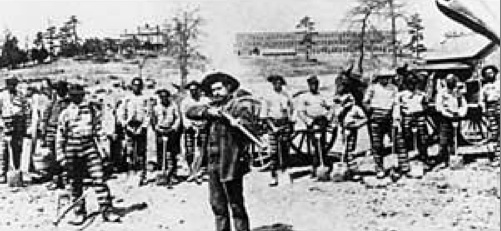
Interview with Pulitzer Prize winning author, Douglas Blackmon-Part 4
Today brings the fourth and last part of the interview with Douglas Blackmon. (Click for Part 1, Part 2 and Part 3.) Thanks and appreciation to Mr. Blackmon for his time and his book, Slavery by Another Name: The Re-Enslavement of Black Americans from the Civil War to World War II. MD: You were “reared,” according to your bio, in the Mississippi Delta. How did being raised in that specific locale affect the writing of the book, or did it? Blackmon: I have been writing about race and even more so I have been perplexed about why the world that I grew up in in Mississippi in the 1960’s and 70’s. Even as a kid I had an abnormally large interest in and concern that something was really strange about this sort of segregated, half-segregated world that I lived in. I was one of a very small number of white kids that were in the public school system in this little farm town and was in the first class in Mississippi to begin the first grade together black and white. When the Supreme Court ordered the immediate integration of 30 school districts in Mississippi in 1969, they closed the school segregated before Christmas, reopened them integrated after Christmas. I began first grade in 1970, so I was in the first class to start on the first day and go through twelve grades together. In most towns in the delta, which is a majority black area, but more so then than it is now, what that meant was that all whites left immediately, except a small number. In my town it was different in that there was a small group of white farmers who, while not particularly liberal, believed that the school system needed to be saved. There was a group of more moderate whites who pledged to send their kids to the public school system. When those schools integrated they became 70% black instead of 99% black. I went to a school that was about a quarter to a third white all the way through 12th grade. So I had lived in this majority black world in my school days, but everything else in my life remained largely segregated. Segregated baseball teams, segregated Boy Scout troops, and segregated church for all intents and purposes. It was just a very hostile environment. Even as a kid I was acutely aware something was wrong and started writing about it. I wrote an essay in the seventh grade, which was the beginning of my writing about it. In many respects I view it all as one continuum of things that I’ve written about and the book is just the biggest chunk of things that I’ve done. MD: When the book was published and people who had read it began talking to you about it, how many people were completely unfamiliar with these events in history from the end of the Civil War to the end of World War 2 and the demise of the convict-lease system? Blackmon: Most. The vast majority of people say that-white and black. There is a very significant subset of people who have studied 20th century American history or academics who’ve studied this or others who’ve studied this on their own. It’s like when Eric Foner’s book, Reconstruction: America’s Unfinished Revolution, 1863-1877, came out in the late ‘80s. If you were a student of history, you would have known a lot of facts that pertained to Foner’s work, but Reconstruction articulated what had happened and articulated the idea that the way the puzzle pieces had been put together in the past was distorted if not grossly false. Even people who thought they had a very up-to-date view, recognized this was different from the classic, historical view of Reconstruction. There were many savvy Reconstruction scholars who were suddenly dwarfed by this interpretation. In the same way, there are many people who are familiar with the facts [of the convict-lease scheme], but didn’t have the jigsaw pieces put together. Some people said they knew all about it, or were under the impression that they did, but really they didn’t. Certainly it has been true that people who had not studied this had no comprehension of what had happened and I do think it’s true for the vast majority of black and white Americans the period from the end of the Civil War to the beginning of the Civil Rights movement is just a blank space. MD: Do you think that some kind of reparations is due to African Americans living today? Blackmon: I think the notion of reparations that has been most discussed is this idea of some sort of cash payment to living African Americans to make up for antebellum slavery or something after that. It sounds good in theory and you can make a compelling intellectual argument for that, but I think mechanically and legally it’s impossible. The problem, particularly with antebellum slavery, is who owes the money? There were 200,000 Union Soldiers who died to end slavery; does that change the calculations? Even with these atrocities that I write about there is a statue of limitations, so after a certain point in time you have no legal remedy for things that happened in the past. People like Charles Ogletree of Harvard Law School have really tried to test the boundaries of the legalities and so far have not been able to bring anything to pass. It seems the only way would be a political resolution, where Congress would pass laws to facilitate it. My general view is that it is complicated and it is probably not the most productive way. What I do think is that we already know from the experience of the last 40 years, since 1970, that when African Americans have had access to the main wealth generating mechanisms in America they have had fantastic achievement. Even though it doesn’t always work as well as we want, things like affirmative action have provided benefits,
Our problem is bigger than a Massachusetts senate race
With Scott Brown’s win and Martha Coakley’s concession Republicans are rejoicing that the 60 vote, filibuster proof lead in the senate is gone and with it, they believe, Obamacare. Brown defeated Coakley to win the seat vacated at the death of Edward Kennedy giving the northern state its first Democratic senator in 31 years. One Facebook comment read, “Welcome Massachusetts to the United States!” with reams of comments affirming a smart decision made by the state and enough tweeting to temporarily stifle the world’s largest micro-blogging website. By conservatives, this is largely seen as a national repudiation of President Obama’s policies, but some liberals are claiming that this means change is not happening fast enough so things need to be speeded up. Eternal house fixture Barney Frank (D-MA) recently stated the need to remove the filibuster law to keep Republicans from delaying legislation that he views as important, ie, healthcare. Video of the Frank audio: As celebration over Scott Brown rises from some quarters, moaning elsewhere and, perhaps, incense from yet other points, I’m thinking that we need to realize something. We have a bigger problem. Much bigger. Our problem is that we live in a country with a two-party dominant political system and each of those parties endemically places its own interest above the interest of the country. Democrats want what Democrats want and Republicans want what Republicans want and never the twain shall meet. Unless there is a terrorist attack of course and, then, there is temporary uniting, until the ensuing war lasts a little too long and, well, all bets are off. When America reaches this point, as it does periodically no matter who is in the White House, there is a feeling of exasperation with Washington. A feeling that no matter who is sent to the hill the outcome will be the same. Two quick examples: Obama is catching flack from the right for attempting to drastically expand the size and scope of the federal government (which he is), while Bush 43 was excoriated from the left for drastically expanding the size and scope of the federal government (which he did). Obama is not listening to the wishes of the people regarding healthcare; Bush did not listen to the wishes of the people regarding the first TARP bailout. Both of their concerns were more aligned with their perspective party’s dominance than with the good of the country. Neither party knows what they are doing, neither party knows what needs to be done, neither party has the guts to make hard decisions. So the country is left with a government full of non-leaders (Obama, Bush) and pseudo-leaders (Pelosi, Reid, Lott, et al) and disinterested people. A government ostensibly of the people and for the people has been all but disowned by the people. When we reach this point, the question always arises, “Why do people with common sense, business sense and economic sense not run for office?” I think there are two reasons. The everyday American has no desire for every nook and cranny of their lives to be turned inside out by 1,000 reporters all looking for the next Watergate or Monicagate, so they do not place themselves in the public light. A second reason is that the average person does not want to run for office is no one wants to be associated with a loser, which is how the government is perceived. The US congress regularly gets approval ratings that would make Hugo Chavez blush with pride. Thus we are stuck with two underperforming parties, both consumed with their own agendas to the detriment of the country, together constituting one vast underperforming, soggy-bottom government. My thought is that only independents will be able to turn the country around. 40% of the country vote for the Democrat in every presidential election and 40% of the country vote for the Republican in every presidential election. This means that every president is elected by 20% of the voters-the independents, who vote on the issues and the individual rather than a party. A rise of independent representatives and senators will force more dialogue and the kind of compromise that might actually see meaningful, common sense legislation passed by government. So what if things move slower? Common sense by common people will not produce bills 2,000 pages long and will actually be read by those voting. Who knows, they might even listen to the people who sent them to Washington in the first place. Independents, free from party loyalty, would be better equipped to do what is best for the country, or to govern for the people, since they are actually of the people. (I’m not talking about “Independent Democrats” like Joe Lieberman, who is an oxymoron.) We the people, however, are part of the problem since we are afraid to go the independent route. As a result we get senators and representatives who would be more at home with personal ambulatory care than national healthcare (see the twin cases of the vegetative Robert Byrd and catatonic Strom Thurmond). States keep sending the same useless, ineffective people to Washington because of the benefits such longevity provides for the home folks. Roads, bridges, business benefits, etc, all play into this tragicomedy that we call the U. S. government. I think that independence is the way to go for the foreseeable future. I’m not under any illusion that the mid-term elections will see 100 independents sent to the house and 20 or so sent to the senate, since, as noted above, people are loathe to run under such a title. Instead, we will get an influx of Republicans, see a closer balance of power and return to the same ineffectual leadership, only more so. So, who’ll run under the purple “I”? If you enjoyed this article, submit it to Digg, Reddit or your favorite social networking site tagged below. You can also use the email icon to send it to a friend or family member.

Interview with Pulitzer Prize winning author, Douglas Blackmon-Part 3
Douglas A. Blackmon is the Atlanta bureau chief of the Wall Street Journal and winner of the 2009 Pulitzer Prize for general nonfiction for his extraordinary book, Slavery by Another Name: The Re-Enslavement of Black Americans from the Civil War to World War II. Because of the depth of today’s subject matter and the length of the answer, only one question from the interview will be featured. This is part 3 of 4. (Click for Part 1 and Part 2.)

Interview with Pulitzer Prize winning author, Douglas Blackmon-Part 2
A lost segment of American history is revealed by Pulitzer winner Doug Blackmon.

Interview with Pulitzer Prize winning author, Douglas Blackmon-Part 1
A lost segment of American history is revealed by Pulitzer Prize winning author Doug Blackmon.
Martin Luther King, Jr, ‘I Have a Dream,’ speech video
Quite simply one of the great American speeches and of the greatest speeches of human history.
‘Do It Anyway,’ a poem by Mother Teresa
People are often unreasonable, illogical, and self centered; Forgive them anyway. If you are kind, people may accuse you of selfish, ulterior motives; Be kind anyway. If you are successful, you will win some false friends and some true enemies; Succeed anyway. If you are honest and frank, people may cheat you; Be honest and frank anyway. What you spend years building, someone could destroy overnight; Build anyway. If you find serenity and happiness, they may be jealous; Be happy anyway. The good you do today, people will often forget tomorrow; Do good anyway. Give the world the best you have, and it may never be enough; Give the world the best you’ve got anyway. You see, in the final analysis, it is between you and God; It was never between you and them anyway.
Celebrities and the cult of over importance
Foreign Policy magazine posted a sobering history of the last half-century of Haitian “natural” disasters like hurricanes and flooding to human disasters Papa and Baby Doc Duvalier, the father and son dictators. Photo after photo and news report following news report show a level of devastation that reminds one of Hurricane Katrina or the Asian tsunami a few years back. Five thousand members of the American military are on the way to Haiti for clean up and possible peace keeping if security on the ground begins to deteriorate. Without a functioning center of government, this is all but certain. As money begins to pour in via text message commitments, 800 numbers and religious channels, MTV has announced its partnership with George Clooney to sponsor a telethon. From the article: As the crisis in Haiti continues in the wake of the devastating 7.0 earthquake on Tuesday, MTV and George Clooney have teamed up to present a telethon to rally support and raise money for the embattled country. On Friday night, January 22, the Oscar-winning actor will appear in a bi-coastal telethon and fundraiser on all MTV Networks channels. All proceeds will go toward relief efforts in Haiti. to host a telethon fundraiser. Another report indicates that NBC, ABC, HBO and CNN will also air the broadcast. Bradangelinapittjolie are/is said to be contributing a million dollars to the effort and, if form holds, we shall hear of other substantial donations in the days ahead. While anyone with a caring bone in their body rejoices at these efforts, the fact remains that there have been people on the ground in Haiti for decades ministering, running orphanages, clinics, hospitals and schools without any government assistance or an earthquake to rouse slumbering Oscar winners, nominees and wanna-bees. My parents supported financially for more than 20 years, perhaps more than 30, a family of missionaries to Haiti. The organization, Grace Mission to Haiti is small and unknown to Hollywood, but has demonstrated to be more effective than a telethon can ever hope to be no matter how large the donations or how well intended the donors. Grace Mission will be in need immediately: We have several ministries which are located in the area of Carrefour and very close to the epicenter of the earthquake. The medical clinic, the church and school at Riviere Froide and the mission office and Pastor Beril’s church school are all located in, or close to Carrefour. Some of these buildings, particularly at the medical clinic and Riviere Froide may have been in direct line. Damage is expected to be extensive and may require total rebuilding. We do not know the extent of damage, if any, at Grace Center. Thankfully, the primary national leader and his family are safe at this time. Members of the Southern Baptist Convention are also on the ground already. Reports have already been tendered of teams who were in Haiti at the time of the earthquake and teams on the way. Southern Baptist volunteers are trained in mass feeding, clean up and recovery and communications. A place to make donations knowing that 100% of the money goes to the relief effort is through Baptist Global Response. Another is through the fine work of Compassion International (Facebook), through whom you can feed a family for a week with a gift of $35. Give if you can, give what you can. Haiti Earthquate [Technorati claim token: NPVQQPHU7APB ]