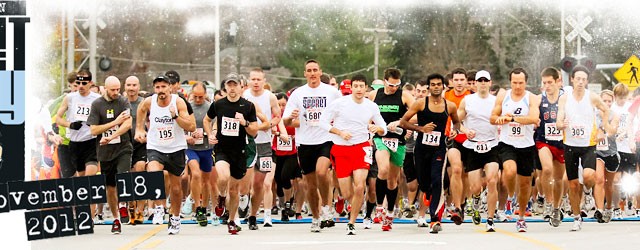
I started running about three-and-a-half years ago because I was tired of getting high cholesterol reports from my doctor. Given the option–at the age of 45–to go on cholesterol medicine or change my diet and start exercising, opting for the latter seemed a no brainer. Running is not particularly enjoyable for me, though I have a number of 5K races now under my belt (22:10ish is my PR). Lately I’ve been running exactly 1 mile as fast as I can in our hilly subdivision. This is a pre-work workout three days a week, followed by a longer run on Saturday mornings. My PR for the mile is 5:55 in a flat school parking lot near our home. Over the last year or so three of my ministry friends have either run half marathons (Brett Allen and Phil Wages) or a marathon (the out-of-his-mind Jay Sanders, who wrote about it here). If they had not blazed the way I doubt what follows would have happened. Today I registered for the Secret City Half Marathon to be held in November in Oak Ridge, Tennessee. It is six weeks from this weekend, so I think there is enough time. Three, four and five miles the last three weeks seems a good trend. My goal is to run 1:50 or under. Advice?
On voting as an American citizen, by a Chilean immigrant
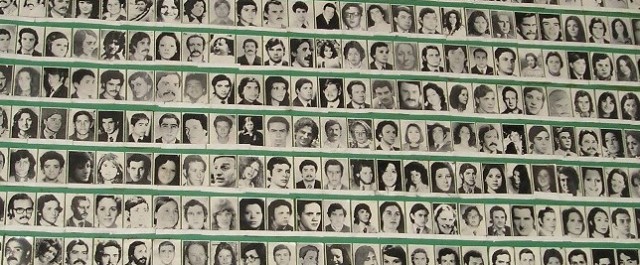
Elizabeth is a friend from Chile. She has been in the U.S. for more than a decade after being raised under one of our government’s favorite dictators, the brutal human rights abusing Augusto Pinochet. I am originally from Chile, but two years ago I became a naturalized US citizen. This upcoming election is the first time I will ever vote for a president. I was born and raised under the dictatorship of Pinochet, and as you know he made all the decisions for us. It’s been a while now that Chile has had a democratic government, but I never had the chance to vote because I moved to the US 11 years ago. All that just to say that your posts have been so helpful to me. I don’t take voting lightly. It is something very serious to me. I didn’t choose to be Chilean, even though I’m proud of it. But I did choose to become an American citizen. I take to heart all the things I promised during that ceremony. I think I am the luckiest person in the world because I am a citizen of two countries I deeply love. But most importantly I am a citizen of the Kingdom of God! As the day of the election approaches I keep reading everything I find about the candidates on all the typical sites that support them. But also I read a lot of international news about the election. I think they show a little more objective points of view. But anyways… I just thought I let you know that I have found your posts so refreshing, special in foreign policy. As I mentioned I am proud of my 2 passports, but I hope that never stands in way of God and me. So many people today act like Americans first and then Christians. Instead of being Christians first and then American, and then Republicans or Democrats. I love your posts about social justice. That is a subject that means so much to me, and as Christian we don’t talk about it enough. Or more than talk, we don’t do enough to deal with it. It is easier to look the other way, and go to a mission trip once a year and keep telling ourself that that is enough. Thank you for keeping a meaningful conversation open. As the first Tuesday of November draws near with rhetoric reaching a fevered pitch, accusations be hurled like ammo in a cow patty fight, and orchestrated lies spew from both major campaigns, be mindful that people all over the world would legally take your place and mine. And illegally, too. So whether you vote for Johnson, Obama, Romney, write-in or exercise your constitutional right not to cast a presidential vote, do neither of them lightly or, as I am prone, cynically. Pray, study, consider, meditate and decide. But, whatever your choice, make is with the seriousness of a people granted the right to have the decision.
How much of your life is online? All of it [VIDEO]
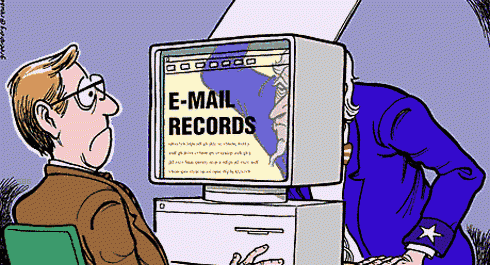
How much of your life is online? How much could someone find out about you in just a few minutes? Watch this. This commercial may be the most disturbing 2:28 of your month. (HT: Twenty-two Words and Image credit)
Thinking through a fully biblical justice
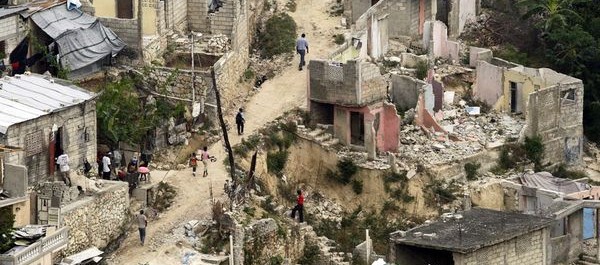
It seems as I grow older issues of justice and injustice occupy more of my thoughts. A recent phone conversation reminded me the change itself has only been a few years in the making. A reader of this blog (and my two previous efforts) said, “I’ve noticed that you have been writing more about justice lately,” noting the difference from emphases in blogs gone by. He would be correct, and he was supportive. Justice, so often limited to a single topic in the conservative Christian mindset, is now in full view all around me. With increasing regularity legal actions, political agendas, or economic policies present themselves to these eyes framed not in the politick of left vs right, nor the antagonistic vitriol of conservative vs liberal, but whether biblically just or unjust. As God would have it the Bible says a lot about justice. Some dismiss “social justice” as some kind of left-wing, commie-pinko plot to redistribute Bill Gate’s billions. Others claim justice is a “social gospel” supplanting evangelism in favor of sweeping streets, picking up litter or planting trees. Yet the Old Testament prophets warned about the treatment of the poor, the widows and orphans, while the New Testament eschews favoring the rich and promotes caring for the poor. How issues God writes large become small print to so many is either a symptom of our lukewarmness or a cause of it. Neither is a good scenario. In the U.S. many Christians have elevated one injustice, abortion, to a level no other injustice approaches. Though arguing the issue as “right to life” we have less presented it as an issue of biblical justice. Since many Christians and churches are bereft a fully biblical view of justice all the while watching as this crucial one became a political football. In other words failing to provide a larger context of God’s justice allows “woman’s right to privacy”–which should be discarded as a non-sequitur–to guide the conversation. Because we have no fully biblical sense of justice we rarely speak out about the homeless. We complain that they do not work, criticize them when they try, then will not support their efforts when they do. It matters not where they stay as long as they are not on my street, in my yard, or on the sidewalk on the way to work. White Christians in America rarely speak out about the unjust treatment of minorities–especially African-American men–who are unconstitutionally targeted and prosecuted more harshly than their white counterparts…for the exact same crimes. We rarely speak out about economic inequity because we tend to be capitalists first and biblicists later. We rarely speak out about a military-industrial complex that has affected and continues to affect the spiritual lives of our citizens just as President Eisenhower warned. We rarely hold our elected officials to account for helping crash the economies of smaller nations. We rarely fight for denied rights for those with whom we disagree on other issues for fear the all encompassing “slippery slope” might give them an upper hand in some area(s) of disagreement. We alternately use and condemn non-citizens in our country outside legal channels (“illegal aliens”) when it is convenient. Never mind the Word says, “For I [Jesus] was hungry and you gave me something to eat, I was thirsty and you gave me something to drink, I was a stranger (foreigner, alien) and you invited me in.” Recently the posed question, “What is biblical injustice?”, brought several thoughtful answers. My friend Paul Littleton wrote, Justice and righteousness are basically the same word in Greek. It has the idea of both doing right and making things right. In a world that has gone wrong, justice is a matter of setting things right. Injustice would be both being a part of a process that makes or keeps things wrong or simply standing by passively in the presence of the wrong. My friend Mark Kelly, a journalist and editor at Multiply Justice said, [B]iblical justice is about right relationship, with God, with others, with creation. It’s about being brought into what the Jewish scriptures call “shalom” — a state of well-being in which people can flourish and achieve what God created them to be. Justice is the outworking of salvation. It begins with the “new creation” transformation of a broken soul and grows as that person matures in wholeness and multiplies that justice into the broken lives around him. Justice is God’s kingdom come on earth as it is in heaven. Justice is what Jesus died to accomplish. Justice is our mission as ambassadors of reconciliation. Citing Deuteronomy 10, Pastor Arthur Thompson, Jr. explained: The duty to execute justice was an integral part of God’s law, founded upon his holiness, filled with his promise of security in the land. Its standards were plain: impartiality and the shunning of bribes and influence that would pervert justice. To do justice is the hallmark of the righteous king, proof that he walks in the way of God’s wisdom. Finally, my friend Todd (Paul’s brother), summarized thusly: The practice and structures that reconcile, restore, and make whole those who have suffered the indignities of power, the powers, and powerful people. Power treats as un-human those that are human. Biblical justice is the God-ward move that stands with those who have been maligned, marginalized, and discarded by any society, power, or persons. One problem we face with definitions is, “Are they complete?” Our propensity toward brevity, need for tweetability and desire toward the easily remembered can give us something like, “Injustice is stuff God does not like,” which, being so broad, tells us practically nothing. I have been thinking through two rather lengthy definitions which, when finalized, will form the basis for my own writing. Injustice is the deprivation of basic human rights, dignity or freedoms by those in authority through oppressive or unfair laws, customs or mores that allow the physical, sexual, or economic exploitation of men, women or children who lack power, position or voice,
Les Miserables extended first look [VIDEO]
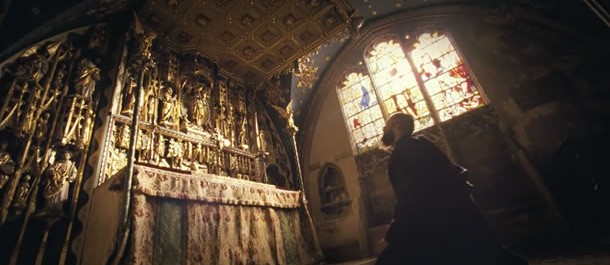
Yes. Yes. You need to see this. Now. This 4:37 extended video is excellent. From Rope of Silicon: Directed by Tom Hooper (The King’s Speech), the adaptation of Victor Hugo’s classic is set against the backdrop of 19th-century France and tells the story of broken dreams and unrequited love, passion, sacrifice and redemption–a timeless testament to the survival of the human spirit. Hugh Jackman plays ex-prisoner Jean Valjean, hunted for decades by the ruthless policeman Javert (Russell Crowe) after he breaks parole. When Valjean agrees to care for factory worker Fantine’s (Anne Hathaway) young daughter, Cosette, their lives change forever. The rest of the cast includes Amanda Seyfried, Eddie Redmayne, Aaron Tveit, Samantha Barks, Helena Bonham Carter and Sacha Baron Cohen and the film will include recognizable songs including “I Dreamed a Dream,” “Bring Him Home,” “One Day More” and “On My Own” as well as an all new song titled “Suddenly” written by Claude-Michel Schonberg and Alain Boublil and performed by Jackman.
One former British soldier talks about drone warfare
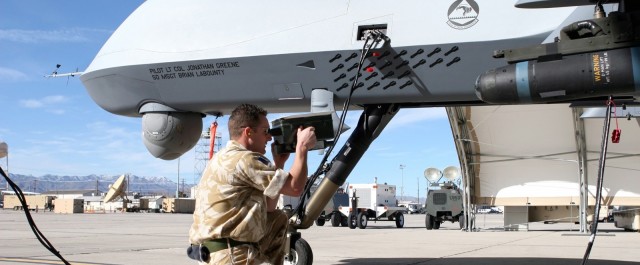
I got a trackback link today from UK Guardian reporter James Jeffrey from his article Drone warfare’s deadly civilian toll: a very personal view. Jeffrey, a British journalist based in the United States, left the British army as a captain in April 2010. He had served over nine years in the Queen’s Royal Lancers, including operational tours in Kosovo (2002), Iraq (2004, 2006) and Afghanistan (2009). No panty waste liberal he. Jeffrey observed firsthand the unique dangers of the drone warfare President Obama has come to command with varying degrees of ineffectiveness. I used drones – unmanned aerial vehicles – during the nadir of my military career that was an operational tour in Afghanistan. I remember cuing up a US Predator strike before deciding the computer screen wasn’t depicting a Taliban insurgent burying an improvised explosive device in the road; rather, a child playing in the dirt. Ostensibly safer than the laser guided missiles that enthralled so many Americans during the Gulf War, drones are not without collateral damage. (In a curious turn of logic the U.S. government is currently the subject of a lawsuit for not honoring a Freedom of Information Act request for a program it has repeatedly admits exists.) One of Jeffrey’s concerns is how drone warfare creates a more detached feeling between war and the deaths arising from it. Reminding readers of the brilliant historian Hannah Arendt he writes: Arendt described the history of warfare in the 20th century as the growing incapacity of the army to fulfil its basic function: defending the civilian population. My experiences in Afghanistan brought this issue to a head, leaving me unable to avoid the realization that my role as a soldier had changed, in Arendt’s words, from “that of protector into that of a belated and essentially futile avenger”. Our collective actions in Iraq and Afghanistan after 9/11 were, and remain, futile vengeance – with drones the latest technological advance to empower that flawed strategy. Drones are becoming the preferred instruments of vengeance, and their core purpose is analogous to the changing relationship between civil society and warfare, in which the latter is conducted remotely and at a safe distance so that implementing death and murder becomes increasingly palatable. Hyperbole? But I was there. I sat in my camouflaged combats and I took the rules of engagement and ethical warfare classes. And frankly, I don’t buy much, if any, of it now – especially concerning drones. Their effectiveness is without question, but there’s terrible fallout from their rampant use. Both Pakistan and Yemen are arguably less stable and more hostile to the west as a result of President Obama’s increased reliance on drones. When surveying the poisoned legacy left to the Iraqi people, and what will be left to the Afghan people, it’s beyond depressing to hear of the hawks circling around other theatres like Pakistan and Yemen, stoking the flames of interventionism. I fear the folly in which I took part will never end, and society will be irreversibly enmeshed in what George Orwell’s 1984 warned of: constant wars against the Other, in order to forge false unity and fealty to the state. It’s very easy to kill if you don’t view the target as a person. When I went to Iraq as a tank commander in 2004, the fire orders I gave the gunner acknowledged some legitimacy of personhood: “Coax man, 100 meters front.” Five years later in Afghanistan, the linguistic corruption that always attends war meant we’d refer to “hot spots”, “multiple pax on the ground” and “prosecuting a target”, or “maximising the kill chain”. No doubt this change of view also makes it easier to justify the use of drones against bombing, even if those numbers are under-reported or even hidden. I have previously written here and here about drones on U.S. soil. That implementation is a direct result of military use in war, and it is only a matter of time before we see similar results. Further muddying the waters resultant from drone operators traipsing down the center of the creek is the ethical dilemma of the kind of war drones create. Consider this: [T]he real question posed by unrestricted drone warfare is how drones change and re write the rulebook and ethics of modern warfare itself. Brookings Institution policy wonk PW Singer makes a chilling observation: IF armed unmanned drones are used against legitimate military targets in, say, Pakistan AND these drones are piloted out of the suburbs of Las Vegas, Nevada THEN is a Pakistani ‘radical’ car bomb in the Walmart parking lot outside that Air Force base in Las Vegas an act of terrorism… or a legitimate act of military retaliation? That right there my friends is one of the most interesting military questions of our time. Is the ‘War on Terror’ justifiable if you can remotely deal death from the skies on the other side of the planet and call it ‘military action’? By that very logic, a Pakistani or Yemeni national chucking a grenade into an American Mall food court during the Christmas shopping season is a military strike and not terrorism. The new paradigm of 21st century US drone warfare makes all civilians targets and covert operations ‘outside theater’ on US soil by Middle East nationals legitimate acts of war. It appears “terrorism” may be reduced to who is committing what where against whom and who reports it. And, we do well to remember, the winners write the history for the generations following to believe. It will be to our lasting detriment if we who are followers of Christ bequeath to them unbiblical injustice garbed in hawkish rhetoric.
Why do homeless people have cell phones?
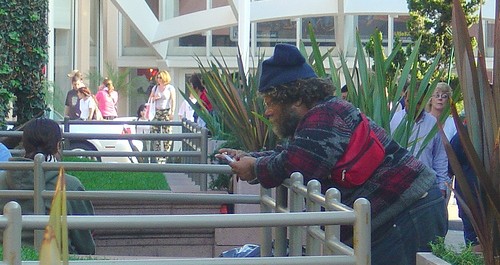
Often argued as evidence that the system of government support is failing is homeless people who have cell phones. I have seen memes on social media as well as blog posts questioning how homeless people who ostensibly cannot afford food and clothing can carry a cell phone. One scenario is presented in the September 13-26, 2012 issue of The Contributor. Jesse Call writes, His daughter is in the hospital and is about to die. Her blood work shows she has diabetes but does not know it. He has finally landed a job if he can start later today. She might get a job if she can interview tomorrow morning. The river’s about to flood his campsite. She just got assaulted and robbed and needs help. […] Health care providers, career counselors and those living on the streets tell The Contributor that having access to a mobile phone is essential for people enduring homelessness, even if it means they will face some criticism from uniformed passersby who question the authenticity of their homelessness because they have a phone. Federal and state governments have long recognized mobile phone access as a need for those experiencing homelessness and poverty. Governments have teamed up with major cell phone service providers to offer free or low-cost cell phones to people with low incomes under the Lifeline Assistance Program. […] “People shouldn’t have to face the decision to pay for phone service or pay for food,” said Jack Pflanz, spokesperson for Assurance Wireless, one of the providers of the Lifeline Assistance Program in Tennessee. “In today’s society, I think it is essential that someone experiencing homelessness has access to phone service.” It should be remembered by those who are not involved in ministry to the homeless that not all homeless people are shiftless vagrants who would not have a job if “someone gave them one.” The fact is many homeless did have jobs at one point. Currently homeless does not equate to always homeless. If you live in Nashville, TN, or the surrounding areas you will often see distributors of The Contributor newspaper. New editions are out every other Wednesday. You might not be aware these “sales persons,” always identified by a large, yellow tag, are actually entrepreneurs. They buy their entire supply of papers for twenty-five cents each, then sell them for a dollar each. I usually buy multiple copies from several distributors. Overpaying, aka being a blessing, is common and should be. What seems like small change for a fully employed person is a bounty for a person sharing a one bedroom hotel room just to stay off the streets. Rather than asking why some homeless guy is able to afford a cell phone, perhaps we should ask, “Why am I not willing to spend a dollar, or five dollars, to help a person who has to work outside, rain or shine, six or seven days a week to afford the most basic needs and stay off the sidewalks at night?” Surely following the example of Jesus’ Good Samaritan requires at least some effort to help the homeless. Perhaps the real problem is not with the homeless after all. [Image credit]
What is biblical injustice?
There is a lot of talk these days about injustice, even reminders of God’s command in Micah 5:8 to “do justice.” I have written a lot about justice and injustice on this blog; just click the injustice tag link for proof! Before tackling more injustice issues, I am curious to learn how others define injustice. I am particularly looking for biblically based ideas of injustice, but am interested in cultural ideas as well. Take your best shot in the comments, either the Facebook comments or the regular WordPress comments. If you use the Facebook comments consider checking “Post to Facebook” to expand the conversation. Social sharing would be appreciated especially if you know someone passionate about justice issues.
Charting tax rates and economic growth in the U.S.
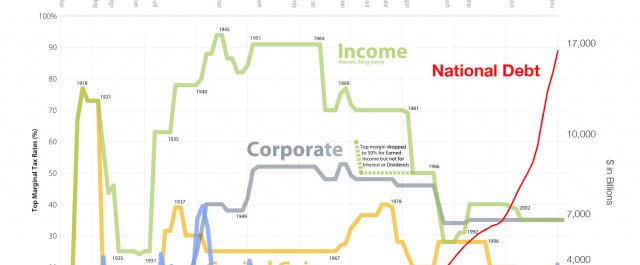
As accusation and counter-accusation fly around during the election season few places–excepting the recent, tragic embassy attacks–garner any more attention than taxes. Should we raise taxes on the rich and cut taxes on the middle class? What about that phantom 50% who, supposedly, do not pay any taxes at all? Should we extend the Bush tax cuts?? The Democratic Party wants to raise taxes on the “wealthiest Americans,” while the Republican Party wants to keep taxes low. Both Republicans and President Obama agreed to keep the “Bush tax cuts” in place, though they are set to expire soon. Many conservatives believe that allowing the wealthy to keep more of their earnings will trend toward economic growth. Many liberals believe taxes should be raised on the wealthy to continue social programs that benefit the poor. Plenty of citizens are convinced that raising taxes on the wealthiest Americans will hurt an already depressed economy. Another boat load of citizens believe raising taxes on the wealthy is the only way to realistically talk about balancing the budget. To my amusement many people who identify as liberal want the wealthiest to pay “their fair share,” while many who identify as conservative want the poor to pay “their fair share.” I am not sure what is “fair” is ever going to make everyone happy.