For no particular reason I have never been a fan of rap or hip-hop, but last week I was drawn into that genre. The fellow responsible for the drawing is an artist known as Propaganda, a self-described “fire baptized, battle rapper, who’s heavily influenced by boat music and bound creative freedom in poetry.” At least I think that’s what he says. The song by which I was drawn is called “Precious Puritans.” The song, from Propaganda’s new project, Excellence, takes pastors to task for uncritically quoting the theology of many Puritan pastors. These would be the same Puritans who owned and abused slaves, while excusing it as the order of things. The lyrics to the song (below) are blistering, insightful, and revealing. Chicago area pastor Joe Thorn brought the song into my field of view with two posts on his blog. The first is an interview with historian and author Dr. Richard Bailey, professor of early American history at Canisius College, and author of Race and Redemption in Puritan New England, (OUP, 2011). The second is an interview with Propaganda, with a lengthy discussion about the song. In short order a twitter exchange broke out with Owen Strachan taking the position the song went too far and would possibly cause avoidance of Puritans altogether. Like not enough fiber in ones diet, I suppose. Last week Strachan took to his blog with the same assertions. It was a weak attempt at a critique. If anything Strachan demonstrated with sterling clarity the very mindset challenged by Propaganda. Next, influential blogger Steve McCoy weighed-in. McCoy is well known for his breadth of musical knowledge and affirmation of the arts. He correctly notes too many people have missed the point of “Precious Puritans.” I could not agree more. Today Steve asks, “Where are the voices of our white, Puritan-loving Southern Baptist leaders, and seminary presidents, and deans, and entity leaders, and prominent pastors? We need your voices on this.” It is a needed, important question. I do not fit into any of those categories, but I do have a few thoughts. One, mainly. Where are the white believers who are seeking responses from African-Americans? Why, when issues of race propel themselves to the fore, do so many white folks think a white opinion is all that is needed? Worse, why do we so readily believe that we automatically provide a correct analysis on any racial issue? Today, Dr. Anthony Bradley, associate professor of theology and ethics at The King’s College in New York City and research fellow at the Acton Institute for the Study of Religion and Liberty, tackled the issue on the Urban Faith blog. Addressing this crucial item he writes: Propaganda’s point is that if white evangelicals do not talk about the bones of their heroes they run the risk of doing great harm to people of color. Many of us are beginning to wonder why white evangelicals do not seem to care much about this and seem willing to trade off “honoring” their forefathers for their own comfort over doing what is necessary to build racial solidarity. Some of my liberation theology friends, in the end, would see Strachan’s critique as a dismissal of acknowledging the importance of caring about how the Puritans are presented to African Americans and would constitute a racial microaggression or a micro-invalidation. There is an ongoing disconnect between most white evangelicals and anything to do with minority culture, especially as it relates to African-American culture. We are so blind and insular that we do not even attempt bridging divides. This is not typically out of hate, but because we know of no such divide. Were the slaves not freed? Was the Voting Rights Act not passed? Was the Civil Rights Act not passed? Do we not have a president who is African-American? Then, what is the fuss? Such is a typical white line of thinking. Two of my African-American pastor friends took the time to respond with their thoughts on “Precious Puritans.” James Roberson III is the Missional Communities Pastor at Blueprint Church in Atlanta, GA. Dr. Dwight McKissic is the Senior Pastor of Cornerstone Baptist Church in Arlington, TX. From James Roberson: Here are some historical facts that aren’t talked about: George Whitfield campaigned to have slaves at his orphanage. Jonathan Edwards owned slaves as well. The Southern Baptist Convention made negro inferiority a theological conviction amongst its convention. Did these negative attributes define who these people were? Not in my opinion. But I wonder if the issue was abortion? What if George Whitfield campaigned for the rights of women to have abortions. Jonathan Edwards owned abortion clinics. The Southern Baptist Bonvention made a woman’s right to choose a theological conviction amongst its convention. I have heard abortion and slavery compared on more than one silly occasion so I figured I would use it here. I think abortion would make us think of these folks very differently. It shows how we value certain issues more than others. I love what Propaganda said in his album and I’m surprised that he hasn’t received more flack than he has. Prop was right. I think the entirety of the poem speaks to the flaws of all leaders, which is a healthy reminder. But what I think we are unwilling to embrace is that white people are far too often tired of the slavery conversation and want to move on. I understand that many white people feel like they shouldn’t have to discuss something they weren’t apart of. Yet what we should embrace is that humans were once used like a rake or luggage; nothing but tools. Black people were considered three-fifths of a human and made white people a fortune. A fortune that many whites have gained a considerable amount of privilege from. It would only be healthy to consistently take a look at how we actually thought God was ok with that. It would also be a benefit to our missiology within cities to understand how
The drone war and the kingdom of God
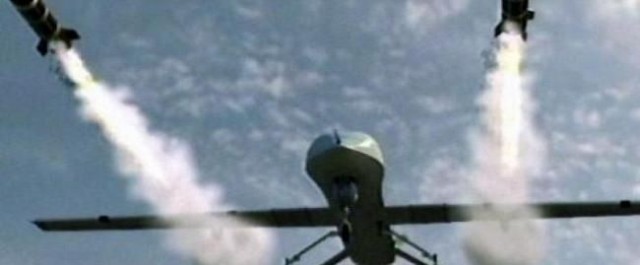
A week or so ago results from a recent in-depth investigative report on America’s drone war were released. Despite horrid reviews for President Obama’s involvement in it, several “mainstream” news outlets reported the findings. A CNN report entitled Drone strikes kill, maim and traumatize too many civilians, U.S. study says states The report accuses Washington of misrepresenting drone strikes as “a surgically precise and effective tool that makes the U.S. safer,” saying that in reality, “there is significant evidence that U.S. drone strikes have injured and killed civilians.” It also casts doubts on Washington’s claims that drone strikes produce zero to few civilian casualties and alleges that the United States makes “efforts to shield the drone program from democratic accountability.” When I wrote about drones in September (“One former British soldier talks about drone warfare”) a linked Washington Post story revealed 92 U.S. drone attacks from January 2011-June 2012 resulted in only five Al Queda leaders being killed. That is 87 misses out of 92 tries. “Misses” being qualified by saying many people have been killed or injured, just not so much the actual enemy. The surgical precision about which our government likes to brag is akin to using a chainsaw to take out an appendix. The scars being about equal. In the second of his two broadsides on why he will not vote for either major party candidate, Atlantic staff writer, Conor Friedersdorf, notes this about drone warfare: Obama terrorizes innocent Pakistanis on an almost daily basis. The drone war he is waging in North Waziristan isn’t “precise” or “surgical” as he would have Americans believe. It kills hundreds of innocents, including children. And for thousands of more innocents who live in the targeted communities, the drone war makes their lives into a nightmare worthy of dystopian novels. Forgive me, but the word “terrorizes” is tellingly ironic. Mitt Romney, the Republican nominee, can be expected to dial up the hubris meter during the election approach. He may even hit 11. To fire up his base he must demonstrate he is even tougher on terrorism than Obama, which, following the most recent 9/11, should not be difficult. But Romney has offered no indication he would scale back the targeted killing program Predators provides. Just yesterday, October 1, 2012, a Washington, DC, CBC affiliate reported drones will soon be able to seek and destroy on the battlefield without human input. Ronald Arkin, a professor at the Georgia Institute of Technology, believes that drones will soon be able to kill enemies on their own independently. “It is not my belief that an unmanned system will be able to be perfectly ethical in the battlefield, but I am convinced that they can perform more ethically than human soldiers are capable of,” Arkin told AFP. Arkin added that robotic weapons should be designed as “ethical” warriors and that these type of robots could wage war in a more “humane” way. And we thought Skynet was so far in the future. Dutifully the military asserts humans will remain involved in drone manipulation, that they will not be autonomous. And we are expected to to believe the military without question. Because the military never lies and the government never participates in cover-ups. Right. This post, however, is not primarily concerned with the politics involved with the drone war. My concern is the relationship of its effects to the kingdom of God. We have been told that drone warfare provides safety to American troops and provides for less collateral damage than other types bombing. Drones are able to provide visuals clearer than a set of latitude and longitude coordinates, I suppose. A Hellfire missile launched from a drone should cause fewer casualties than a Tomahawk fired from a ship. Cleaner shots, better identification, direct hits. All of this adds up to more dead terrorists and a better protected homeland. Except it doesn’t. The Bureau of Investigative Journalism in London, reports, from June 2004 through mid-September 2012, available data indicate that drone strikes killed 2,562-3,325 people in Pakistan, of whom 474-881 were civilians, including 176 children. TBIJ reports that these strikes also injured an additional 1,228-1,362 individuals. Where media accounts do report civilian casualties, rarely is any information provided about the victims or the communities they leave behind. This report includes the harrowing narratives of many survivors, witnesses, and family members who provided evidence of civilian injuries and deaths in drone strikes to our research team. It also presents detailed accounts of three separate strikes, for which there is evidence of civilian deaths and injuries, including a March 2011 strike on a meeting of tribal elders that killed some 40 individuals. Also noted in the report is whenever men of fighting age are killed, even if they are completely unknown, and even if their activity is undefined, they are classified as combatants. That is, if a Hellfire missile lands in the middle of 20 sixteen to eighteen year olds playing soccer, they are classified as enemy combatants. Why? Because we killed them in the course of prosecuting a war. Not because they have been or are in a training camp or have plans to join Al Queda. A quick review: How do we know they were enemy combatants? Because the government said so. How does the government know they were enemy combatants? Because we killed them. They might as well be since, as the NYT reports, “some in the Obama administration joke that when the CIA sees ‘three guys doing jumping jacks,’ they think it is a terrorist training camp.” Very funny. The drone war in Asia and the Middle East has become the “War on Terror” equivalent of the bombing of Laos and Cambodia during the Vietnam War. As if this were not enough our drone strategy includes the very behaviors for which we would condemn terrorists: double strikes. Drones hover twenty-four hours a day over communities in northwest Pakistan, striking homes, vehicles, and public spaces without warning. Their presence terrorizes men, women, and children, giving