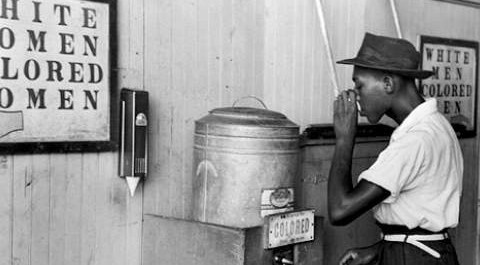
What do you get when you add American slavery, the convict-lease system, the Jim Crow era, and the “War on Drugs”? Give up? You get 150+ years of nearly uninterrupted mistreatment of young, African American men at the hands of businesses, individuals and various governmental agencies in the United States. You get ongoing racial profiling in cities like New York. We in hallowed suburbia who see the brutality of slavery and the lynchings and “coloreds only” water fountains of Jim Crow only in an ever dustier rear-view mirror are perhaps ignorant of the current realities. Those who are ignorant of the multi-decade convict lease system in the South are in our own good company: we know little and most of our friends know less. (I interviewed Douglas Blackmon, Pulitzer prize-winning author of Slavery by Another Name, in this series: Part 1, Part 2, Part 3, and Part 4.) Subtitled “Mass Incarceration in the Age of Colorblindness”, The New Jim Crow takes its name from the condition author Alexander sees exemplified, for instance, in the massive government effort knows as the War on Drugs. This “war” has been so disproportionately prosecuted that a disproportionately large percentage of one specific demographic section of the U.S. population is either imprisoned, on probation or parole: African-American men. Alexander’s case is built brick-by-brick as she examines policing, the court system, laws like Civil Asset Forfeiture, abuses of the Constitution and the favoritism shown to white defendants. She writes: The United States imprisons a larger percentage of its black population than South Africa did at the height of apartheid. In Washington, D.C., our nation’s capitol, it is estimated that three out of four young black men (and nearly all those in the poorest neighborhoods) can expect to serve time in prison. Similar rates of incarceration can be found in black communities across America. These stark racial disparities cannot be explained by rates of drug crime. Studies show that people of all colors use and sell illegal drugs at remarkably similar rates. If there are significant differences in the surveys to be found, they frequently suggest that whites, particularly white youth, are more likely to engage in drug crime than people of color. That is not what one would guess, however, when entering our nation’s prisons and jails, which are overflowing with black and brown drug offenders. In some states, black men have been admitted to prison on drug charges at rates twenty to fifty times greater than those of white men. And in major cities wracked by the drug war, as many as 80 percent of young African American men now have criminal records and are thus subject to legalized discrimination for the rest of their lives. (pgs. 6, 7) Aiding and abetting this treatment are prosecution and sentencing requirements mandated by War on Drugs styled legislation like “Three Strikes and You’re Out.” In 1986, Congress passed The Anti-Drug Abuse Act, which established extremely long mandatory minimum prison terms for low-level drug dealing and possession of crack cocaine. The typical mandatory sentence for a first-time offense in federal court is five or ten years. By contrast, in other developed countries around the world, a first-time offense would merit no more than six months in jail, if jail time is imposed at all. […] Now, simply by charging someone with an offense carrying a mandatory sentence of ten to fifteen years or life, prosecutors are able to force people to plead guilty rather than risk a decade or more in prison…They “load up” defendants with charges than carry extremely harsh sentences in order to force them to plead guilty to lesser offenses and–here’s the kicker–to obtain testimony for a related case. Harsh sentencing laws encourage people to snitch. […] In fact, under federal sentencing guidelines, providing “substantial assistance” [ie, “snitching”] is often the only way defendants can hope to obtain a sentence below the mandatory minimum. The “assistance” provided by snitches is notoriously unreliable, as studies have documented countless informants who have fabricated stories about drug-related and other criminal activity in exchange for money or leniency in their pending criminal cases. (pgs. 87, 88) Add to this unholy mix laws that increase federal assistance based on number of drug-related arrests, inadequate representation from the public defender’s office, warrantless searches and the like, and you have a never ending pool of “violators” into which to cast the net. (For additional contributing factors like race and the Prison Industrial Complex, see my series Our comfortable injustice Part 1 and Part 2.) Alexander’s chapter “The Color of Justice” is particularly disturbing. In a passage on the New York Police Department’s use of “stop-and-frisk” tactics–which should be unconstitutional–she quotes the Center for Constitutional Rights’ Darius Chaney, “[W]e have been saying for the last 10 or 11 years…that with stop-and-frisk patterns–it really is race, not crime, that is driving this.” Alexander concludes, Ultimately, these stop-and-frisk operations amount to much more than humiliating, demeaning rituals for young men of color, who must raise their arms and spread their legs, always careful not to make a sudden move or gesture that could provide an excuse for brutal–even lethal–force. Like the days when black men were expected to step off the sidewalk and cast their eyes downward when a white woman passed, young black men know the drill when they see the police crossing the street toward them; it is a ritual of dominance and submission played out hundred of thousands of times each year. (p. 136) It should raise concerns for followers of Christ not only because of the actual injustices faced by African-Americans but for the mindsets Americans have about such injustices. From page 106: A survey was conducted in 1995 asking the following question: “Would you close your eyes for a second, envision a drug user, and describe that person to me?” The startling results were published in the Journal of Alcohol and Drug Education. Ninety-five percent of respondents picture a black drug user, while only 5 percent imagined other racial

And a Merry Christmas to all
Fa la la la la, la la la la… I love the season of Christmas, the giving and receiving of gifts, the awareness in society that things should be different than they are even if many cannot say why. I love spending time with family. I love having time off work. I love the food, mostly baked goodies, around every turn. Most of all I love the reflection of God becoming human in order to redeem me from sin. This descending to the earth = mind blown for me. The first necessary step on the way to Jesus dying on the cross, Bethlehem’s manger has always captured me entirely. Perhaps because I am human I can at least imagine the idea of dying for another. I have run such scenarios over in my mind many times. Perhaps because I know people who have lost children I can at least imagine the pain of having a child die. But, being holy, omnipotent, and distinct from an entire universe I had created, I cannot imagine. Creating a race upon whom I could bestow love and grace then for those beings turn against me, I cannot imagine. Then leaving aside my privilege, my throne, my universal vantage point, my safety, to become one of the created race as an infant, I cannot imagine. There just is no point of reference for it. Think for a moment about that. Unlimited power traded for powerlessness. Eyes that oversaw all of creation, now fuzzy, blurry and unfocused. Hands that could weigh the world, barely large enough to wrap around his mother’s finger. The king of angels born in a nondescript, unknown Jewish stall. The incarnation is the greatest miracle of all. Josh Howerton calls the Incarnation “by far – the most shocking, glorious, mysterious miracle in Redemptive History.” I agree. We are always warned to not lose Christ in the trappings of Christmas. Let that warning sink in deeply. Now allow me to wish you a “merry Christmas.” And, rejoice over what that means. Thank you for your faithful reading of my blog. I will be taking the rest of the year off from writing and doing very little other social media, so Happy New Year as well.
Until the Prince of Peace shall come
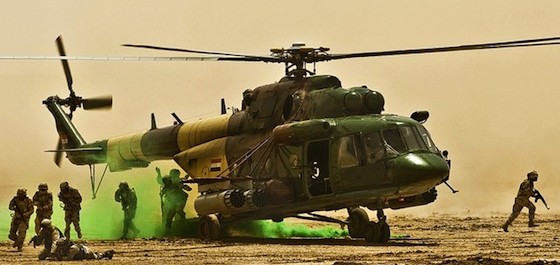
War must be, while we defend our lives against a destroyer who would devour all; but I do not love the bright sword for its sharpness, nor the arrow for its swiftness, nor the warrior for his glory. I love only that which they defend. J.R.R. Tolkien, The Two Towers Of all the promises of Christmas one seemingly stirs our hearts above all others: that the Prince of Peace has come. The Old Testament prophet Isaiah, in one of the earliest writings about the Advent of the Messiah, indicated He would be “named Wonderful Counselor, Eternal Father, Mighty God, Prince of Peace” (9:6). Most people would readily acknowledge such a hope has yet to be realized. Following the mass murder in Newtown, Connecticut last week our thoughts again turned to violence. Twenty children killed before they could even reach the prime of life, whatever that is. Correlations were made to abortion, and, in the view of this writer, rightfully so. By no measure of divine justice will violence outside the womb outweigh violence inside it. Childhelp.org reports five U.S. children die each day as a direct result of abuse while 6 million are abused and/or neglected annually. That equates to another Sandy Hook every four days. According to the International Center for Assault Prevention more than “40 million children below the age of 15 are subjected to child abuse each year” (2001). In addition the World Health Organization estimates that 150 million girls and 73 million boys under 18 experienced forced sexual intercourse or other forms of sexual violence during 2002. What about war? Statistics on war deaths are varied and cover different periods of time, but this site lists conflicts since the American Civil War: 1860-65: USA civil war (628,000) 1886-1908: Belgium-Congo Free State (8 million) 1898: USA-Spain & Philippines (220,000) 1899-02: British-Boer war (100,000) 1899-03: Colombian civil war (120,000) 1899-02: Philippines vs USA (20,000) 1900-01: Boxer rebels against Russia, Britain, France, Japan, USA against rebels (35,000) 1903: Ottomans vs Macedonian rebels (20,000) 1904: Germany vs Namibia (65,000) 1904-05: Japan vs Russia (150,000) 1910-20: Mexican revolution (250,000) 1911: Chinese Revolution (2.4 million) 1911-12: Italian-Ottoman war (20,000) 1912-13: Balkan wars (150,000) 1915: the Ottoman empire slaughters Armenians (1.2 million) 1915-20: the Ottoman empire slaughters 500,000 Assyrians 1916-23: the Ottoman empire slaughters 350,000 Greek Pontians and 480,000 Anatolian Greeks 1914-18: World War I (20 million) 1916: Kyrgyz revolt against Russia (120,000) 1917-21: Soviet revolution (5 million) 1917-19: Greece vs Turkey (45,000) 1919-21: Poland vs Soviet Union (27,000) 1928-37: Chinese civil war (2 million) 1931: Japanese Manchurian War (1.1 million) 1932-33: Soviet Union vs Ukraine (10 million) 1932: “La Matanza” in El Salvador (30,000) 1932-35: “Guerra del Chaco” between Bolivia and Paraguay (117.500) 1934: Mao’s Long March (170,000) 1936: Italy’s invasion of Ethiopia (200,000) 1936-37: Stalin’s purges (13 million) 1936-39: Spanish civil war (600,000) 1937-45: Japanese invasion of China (500,000) 1939-45: World War II (55 million) including holocaust and Chinese revolution 1946-49: Chinese civil war (1.2 million) 1946-49: Greek civil war (50,000) 1946-54: France-Vietnam war (600,000) 1947: Partition of India and Pakistan (1 million) 1947: Taiwan’s uprising against the Kuomintang (30,000) 1948-1958: Colombian civil war (250,000) 1948-1973: Arab-Israeli wars (70,000) 1949-: Indian Muslims vs Hindus (20,000) 1949-50: Mainland China vs Tibet (1,200,000) 1950-53: Korean war (3 million) 1952-59: Kenya’s Mau Mau insurrection (20,000) 1954-62: French-Algerian war (368,000) 1958-61: Mao’s “Great Leap Forward” (38 million) 1960-96: Guatemala’s civil war (200,000) 1961-98: Indonesia vs West Papua/Irian (100,000) 1961-2003: Kurds vs Iraq (180,000) 1962-75: Mozambique Frelimo vs Portugal (10,000) 1962-75: Angolan FNLA & MPLA vs Portugal (50,000) 1964-73: USA-Vietnam war (3 million) 1965: second India-Pakistan war over Kashmir 1965-66: Indonesian civil war (250,000) 1966-69: Mao’s “Cultural Revolution” (11 million) 1966-: Colombia’s civil war (31,000) 1967-70: Nigeria-Biafra civil war (800,000) 1968-80: Rhodesia’s civil war (?) 1969-: Philippines vs the communist Bagong Hukbong Bayan/ New People’s Army (40,000) 1969-79: Idi Amin, Uganda (300,000) 1969-02: IRA – Norther Ireland’s civil war (2,000) 1969-79: Francisco Macias Nguema, Equatorial Guinea (50,000) 1971: Pakistan-Bangladesh civil war (500,000) 1972-: Philippines vs Muslim separatists (Moro Islamic Liberation Front, etc) (150,000) 1972: Burundi’s civil war (300,000) 1972-79: Rhodesia/Zimbabwe’s civil war (30,000) 1974-91: Ethiopian civil war (1,000,000) 1975-78: Menghitsu, Ethiopia (1.5 million) 1975-79: Khmer Rouge, Cambodia (1.7 million) 1975-89: Boat people, Vietnam (250,000) 1975-87: civil war in Lebanon (130,000) 1975-87: Laos’ civil war (184,000) 1975-2002: Angolan civil war (500,000) 1976-83: Argentina’s military regime (20,000) 1976-93: Mozambique’s civil war (900,000) 1976-98: Indonesia-East Timor civil war (600,000) 1976-2005: Indonesia-Aceh (GAM) civil war (12,000) 1977-92: El Salvador’s civil war (75,000) 1979: Vietnam-China war (30,000) 1979-88: the Soviet Union invades Afghanistan (1.3 million) 1980-88: Iraq-Iran war (435,000) 1980-92: Sendero Luminoso – Peru’s civil war (69,000) 1984-: Kurds vs Turkey (35,000) 1981-90: Nicaragua vs Contras (60,000) 1982-90: Hissene Habre, Chad (40,000) 1983-: Sri Lanka’s civil war (70,000) 1983-2002: Sudanese civil war (2 million) 1986-: Indian Kashmir’s civil war (60,000) 1987-: Palestinian Intifada (4,500) 1988-2001: Afghanistan civil war (400,000) 1988-2004: Somalia’s civil war (550,000) 1989-: Liberian civil war (220,000) 1989-: Uganda vs Lord’s Resistance Army (30,000) 1991: Gulf War – large coalition against Iraq to liberate Kuwait (85,000) 1991-97: Congo’s civil war (800,000) 1991-2000: Sierra Leone’s civil war (200,000) 1991-2009: Russia-Chechnya civil war (200,000) 1991-94: Armenia-Azerbaijan war (35,000) 1992-96: Tajikstan’s civil war war (50,000) 1992-96: Yugoslavian wars (260,000) 1992-99: Algerian civil war (150,000) 1993-97: Congo Brazzaville’s civil war (100,000) 1993-2005: Burundi’s civil war (200,000) 1994: Rwanda’s civil war (900,000) 1995-: Pakistani Sunnis vs Shiites (1,300) 1995-: Maoist rebellion in Nepal (12,000) 1998-: Congo/Zaire’s war – Rwanda and Uganda vs Zimbabwe, Angola and Namibia (3.8 million) 1998-2000: Ethiopia-Eritrea war (75,000) 1999: Kosovo’s liberation war – NATO vs Serbia (2,000) 2001-: Afghanistan’s liberation war – USA & UK vs Taliban (40,000) 2002-: Cote d’Ivoire’s civil war (1,000) 2003-11: Second Iraq-USA war – USA, UK and Australia vs Saddam Hussein and subsequent civil war (160,000) 2003-09: Sudan vs JEM/Darfur (300,000) 2004-: Thailand vs Muslim separatists (3,700) 2007-: Pakistan vs PAkistani Taliban (38,000) 2012-: Syria’s civil war (14,000) (Estimates are near 100,000,000 direct war
‘Waking the Dead,’ by Matthew Perryman Jones
Monday night we were blessed to see and hear Andrew Peterson and friends at the Ryman Theater in Nashville performing Behold the Lamb of God. One of Peterson’s friends who he’s “known for many, many years” is Matthew Perryman Jones. Jones, an accomplished musician in his own right, sang a couple of songs on his own and participated in the larger BTLOG performance. One of the songs Perryman Jones did was ‘Waking the Dead’ from his project Land of the Living. You can listen to it below. The entire project is very good and can be purchased through the Amazon link. After giving it a listen, tell me in the comments other artists you think Matthew Perryman Jones resembles stylistically. Waking the Dead by Matthew Perryman Jones on Grooveshark

Can we have a civil gun discussion or not?
The Daily Beast thinks so. The well known site asked its readers to weigh-in on the issue. Gun owners and non-owners alike responded with over 600 reasonable comments (DB discarded an unknown number considered “misguided attempts at humor—from both sides of the fence. Others were downright puerile”). Comments included: Readers from rural areas said that they own guns for practical concerns, like personal safety in homes located far from law enforcement, or as a necessary tool for their livelihoods. “We target shoot. We live in a rural area with livestock,” LP from Colorado said. “We have to be able to defend ourselves from aggressive wildlife, put an animal out of its misery if it is severely injured, and defend ourselves in our isolated environment. People are responsible with their guns here.” A respondent from New Mexico said he or she owns a “.22 pistol to shoot rattlesnakes only in my yard.” Hunters, not surprisingly, represented a good number of gun owners who responded to our survey. “I grew up in a family that hunted and fished,” said Jeff from Minnesota. “However, I do believe that private ownership of semi-automatic and automatic guns and handguns should be totally prohibited. I am perfectly willing to give up all of my guns for the greater good.” A third group of gun owners was made up of hobbyists. An anonymous reader from Minnesota wrote that he or she owns a gun “because the hunting and shooting culture I grew up in taught me to respect life, my elders, and firearms. The relationship between me and my father that developed out of firearms and hunting is incredibly meaningful and the most positive one in my life.” […] “Shooting sports are fun, and legitimate,” Andy from Texas wrote of why he chooses not to own a gun. “But the anxieties of the self-defense crowd are just too much for me. I refuse to believe there are that many bogeymen in the world.” “I don’t need one today, but would want the option to buy one if I change my mind. I could agree with special, renewable permits/licenses and required annual safety training for owners,” wrote one anonymous reader. Other respondents wrote that they see no need to put the fearsome power of a firearm in the hands of civilians, outside of controlled circumstances like hunting. Christina from California wrote that “the purpose of a gun is to kill someone or something. God is the judge of people’s actions, not me. You don’t need an assault weapon to kill a deer or pheasant. If your life feels threatened, you are in the wrong place.” “I have curious kids,” wrote Matt from Maryland in a post that summed up many respondents’ feelings about the unreliable hands even a legally purchased weapon might fall in to. “I might lose my job or my wife and have a nervous breakdown.” If this anywhere resembles a cross-section it appears most Americans are not opposed to gun ownership, but support more restrictions than are currently in place. I was raised in a gun owning family and am a gun owner. My wife and kids are familiar with firearm use. They will soon become even more proficient. Personally, I have never seen or felt the need for owning a hundred round ammo drum. I do not know of anyone who hunts with them either. It is true assault-style rifles are not used for hunting quail; but neither are .22s or a .40 Glock. And neither is a chef’s knife or a baseball bat. I have been to firing ranges with and without someone in charge. Danger never felt near even though every other person was unknown to me. Pay attention when the range is hot and keep your gun pointed toward your target. I have been hunting when the person who knew the least about what was going on was me. Made it through. I’ve known of one person who was killed because he did not unload his gun before he started to clean it. If fell off the table, discharged and fatally wounded him. I also read of a woman who turned around in her kitchen while holding a knife and fatally wounded a family member. I went to the home of a man whose car had slid of the jack stands and crushed him to death in his own yard. Accidents do happen and they involve guns, knives, cars, rocks, construction, the old and the young. People even die having sex. I’ll move to Canada when someone tries to outlaw that. If you are a complete pacifist and refuse to engage violence in any way, then it really should not matter to you whether I choose to defend myself with a firearm, a length of 2×4 or 3 feet of tire chain. I respect your right to allow yourself to be killed. I even respect your right to allow your family to be brutalized while you do nothing. I will defend mine with every ounce of strength and by all available means. Defending the defenseless is not only about abortion. (As an aside, it amuses me when people decry gun ownership, yet when faced with violence themselves, call the police who come to the rescue…with billy-clubs, pistols, body armor and, if need be, assault weapons. As an aside within an aside, it is a little-known fact that a large number of accidental shootings come from…wait for it…the police shooting themselves and each other. Also, waiting for the police is not recommended in the face of evil people with guns. Check these interesting stats.) As I perceive the issue of guns, a few things jump out to me. First, if there is a problem with mentally imbalanced people going on rampages it could be a different discussion than the gun discussion. Frankly, we cannot say of every person who goes on a rampage they are mentally challenged or emotionally damaged. This is the easy, lazy way out and is an insult
SNL almost gets it right
Over the weekend the iconic and well known comedy program, Saturday Night Live, used their “cold opening” in a memorable way. Rather than a sketch The New York Children’s Chorus sang two verses of Silent Night. It was poignant, well performed, and touching. Kudos to the SNL gang for sensitivity during a trying time. Interestingly, the second verse brought substantially changed lyrics. Rather than “Christ our Savior is born, Christ our Savior is born” the singers repeated the phrase “sleep in heavenly peace” from the first verse. Thought this is a day of pluralism I will not speculate as to why the lyrics were changed or who was behind it. But, it does substantially change the meaning of the song. Silent Night is not a generic holiday song like Santa Claus and Popcorn. It remembers the incarnation–the entrance of God Almighty into this world as a human. That is worth the specific lyrics the author intended. (Apologies to Jay Sanders.)

The very best church announcements ever [VIDEO]
From my friends Rick and Christie Garret at Grace Church in Orlando, FL. Starring Hannah Kate and B.G. (not the BeeGees, sorry, Sonya). BTW, click on the video to start. And, have I mentioned that FB video feature pretty much stinks? I hope it will play for you. If not, go here.
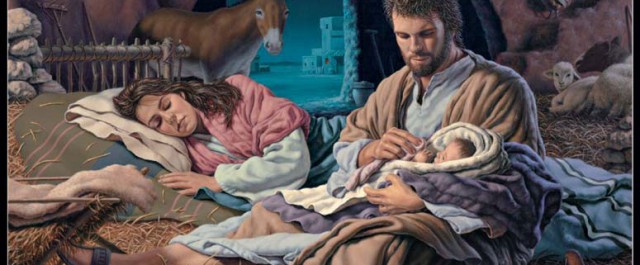
My favorite Christmas art
This may not be art in the classic sense, and Da Vinci probably will not be brought to mind. But…
Majority of Americans support mandatory contraception coverage
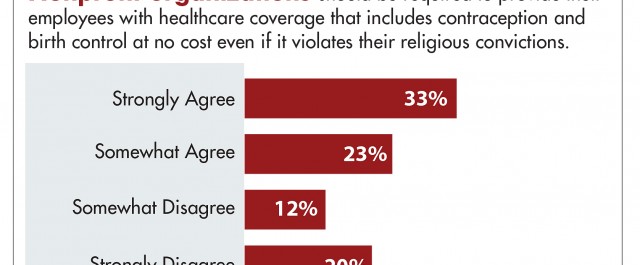
Much ado has been made over the graduated introduction of Obamacare in the last year, including an unknown impact on taxes beginning January 1, 2013. In the recent election Republican Mitt Romney made the repeal of the heath care legislation a major point of his campaign as had other GOP contenders. Christians and Christian business owners from across various denominations have complained that certain requirements of the Affordable Care Act are in violation of their First Amendment free exercise of religion. Specifically, requirements that birth control–even so-called “morning after” or “week after” abortion causing drugs–must be covered by insurance regardless of the beliefs of the business owners. As it turns out, most Americans prefer Obamacare to the first amendment. From a LifeWay News article by Russ Rankin: NASHVILLE, Tenn. — The majority of adults in America believe businesses and organizations, even those with conflicting religious principles, should be required to provide coverage of contraception and birth control for their employees, according to a recent survey by LifeWay Research. At issue is a mandate under the Health and Human Services’ Affordable Care Act (a.k.a. “ObamaCare”), which requires the coverage, even if it violates the employer’s religious convictions. Dozens of organizations – predominately faith-based hospitals and charities, as well as business owners with religious objections – have filed suit claiming the HHS mandate violates the Constitution under the First Amendment Free Exercise of Religion Clause and the federal Religious Freedom Restoration Act (RFRA). According to the LifeWay Research survey, nearly two-thirds (63 percent) of American adults agree businesses should be required to provide their employees with free contraception and birth control, even if it runs counter to the owners’ religious principles. Twenty-eight percent disagree and 10 percent selected “Don’t Know.” The opinions change somewhat when taking into consideration religious affiliation of the organization. Fifty-three percent agree Catholic and other religious schools, hospitals, and charities should be required to provide the coverage, while 33 percent disagree. In considering whether nonprofits should be required to provide the coverage, 56 percent of adults agree and 32 percent disagree they should be required to follow the mandate even if it goes against their religious beliefs. “It is easy for Americans to desire to protect the freedoms of individuals over unnamed business entities,” said Ed Stetzer, president of LifeWay Research. “However, such generalizations may overlook the fact that more than 90 percent of businesses with employees are family businesses. Recent lawsuits contend that the religious freedoms of these families conflict with healthcare choices desired by individuals.” On Nov. 16, a federal court ruled in favor of faith-based Tyndale House Publishers, which filed a health care lawsuit against the government to halt enforcement of the mandate on the grounds of religious conviction. However, three days later another court ruled against the suit brought by the Christian owners of the Hobby Lobby retail stores, stating the owners’ beliefs were only “indirectly” burdened by the mandate’s requirement that they provide free coverage contraception and birth control in Hobby Lobby’s self-funded insurance plan. Hobby Lobby, which filed an appeal of the judgment, faces fines of more than $1.3 million per day. Stetzer clarified the wording of the LifeWay Research poll, which asks about “contraception” and not specifically “abortifacient contraception,” a main point in the Hobby Lobby suit. Abortifacient contraception includes “the morning-after pill,” which induces abortion of a fertilized embryo. “We chose the wording to reflect what is widely reported in the news as a ‘contraception mandate,’” Stetzer said. “Catholic organizations were quick to point out the conflict of the mandate with the religious teachings of the Catholic church, but the details of this mandate concern many other religious groups whose religious beliefs specifically oppose abortifacient contraception. At this point, however, the vast majority of news reports describe this as a contraception issue and the majority of Americans are not supportive of companies, nonprofits or Catholic charities opting out.” While the Supreme Court of the United States upheld most of the Affordable Care Act in a 5-4 vote last summer, the Court on Nov. 26 granted a rehearing to Liberty University in Lynchburg, Va., specifically on the issue of abortifacient contraception. In a press release from the Liberty Counsel, Matt Staver, dean of Liberty University’s law school, said, “Congress exceeded its power by forcing every employer to provide federally mandated insurance. But even more shocking is the abortion mandate, which collides with religious freedom and the rights of conscience.” Demographically, responses to the LifeWay Research poll show Americans who never attend religious services are more likely to “Strongly Agree” (45 percent) nonprofits, Catholic and other religious schools, charities and hospitals should be forced to follow the mandate. The percentage rises to 55 percent when considering businesses in general. The survey shows women are more likely than men to “Strongly Agree” that all three organizational categories: businesses (48 percent vs. 37 percent); nonprofits (37 percent vs. 29 percent); Catholic and religious schools, hospitals and charities (36 percent vs. 26 percent) should provide the coverage. Younger Americans are the least likely (less than 10 percent) to “Strongly Disagree” with businesses and organizations being required to follow the mandate. “The religious freedom that the United States pioneered is not a freedom of belief, but a freedom to practice that faith,” said Stetzer. “The American public appears unaware or unconcerned that some religious organizations and family businesses indicate fear of losing the freedom to practice their faith under the new healthcare regulations.” Methodology: The online survey of 1,191 adult Americans was conducted Nov. 14-16, 2012. A sample of an online panel representing the adult population of the United States was invited to participate. The sample provides 95 percent confidence that the sampling error does not exceed +2.9 percent. Margins of error are higher in subgroups.