
Over the last year the social media site Pinterest has grown at an exponential rate. The site has more recipes, home decor, home remodeling, and how-to’s than Ted Turner has bison patties. Since its inception it has consumed more women’s time than Anonymous has spent hacking government databases. Users of Pinterest “pin” web pages links on “boards.” These boards can be themed to most any interest. “Following” others on Pinterest allows you to see what they pin to their board. If you like a particular item on another person’s board, you can “repin” it to your board. Influence on Pinterest is measured by the number of followers and numbers of repins. For many, many years Sonya (my wife) crammed recipes into notebooks. Reading through various magazines inevitably led to pages ripped out and put into binders. Those were the “one day I’m doing this in our house” binders. Recently I realized, for her, Pinterest is a visual, organized, readily accessible, virtual binder. The pages that once filled our laundry room are still there, but few have been added since she joined Pinterest. But that was not the most unusual thing. Last week Sonya told me if Pinterest began charging she would pay to keep her account. If you know anything at all about social media you know that “how shall we monetize” is the billion dollar question. ($64,000 was just way too cheap.) Facebook users threaten armed revolt every time the idea makes the rounds. Twitter has banner ads and “sponsored” tweets. That is just a polite way of saying someone I do not follow paid to force themselves onto my feed. So the idea of someone who would willingly and unhesitatingly pay to use a particular social media really caught my attention. I had already begun to think through how Pinterest is different from other types of social media. I have settled on this for one primary difference: Pinterest serves as a repository of information people access again and again. It’s combination virtual bulletin board, notebook and file cabinet all in one online stop. As my wife said, “I don’t want to lose all of that; I’ve worked too hard to get it together.” If that is the case with a large percentage of users, Pinterest may find a way to become profitable where other social media have not been successful, or have feared to try. If you are on Pinterest, please leave me a comment stating why you are drawn to it. If you are a “power user,” would you pay to keep all the pins you have? Do you have a board for blog posts? Take a second to pass this post along to friends who love Pinterest and ask them to leave an answer.
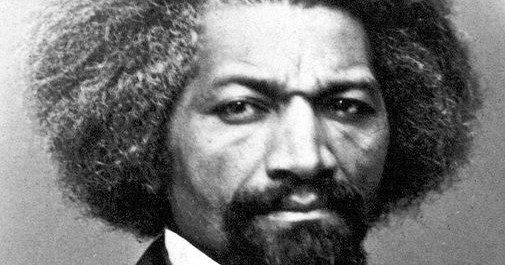
Frederick Douglass on authentic Christianity
A few months back the twitters and blogosphere erupted over a song by hip-hop artist, Propaganda. I wrote about it as well. The song is entitled “Precious Puritans” and is, in a Grand Canyon of understatement, thought provoking. Concerning well beloved puritan theologians, he raps: How come the things the Holy Spirit showed them in the valley of vision didn’t compel them to knock on they neighbors door and say, “You can’t own people!”? Your precious puritans were not perfect. You romanticize them as if they were inerrant. As if the skeletons in they closet was pardoned due to the they hard work and tobacco growth. As if abolitionists weren’t racist and just pro-union. As if God only spoke to white boys with epic beards. You know Jesus didn’t really look like them paintings. That was just Michaelangelo’s boyfriend. Your precious puritans. Dr. Anthony Bradley, addressing the response to the song (too often White and negative), tweeted this: Evangelicals tend 2 misinterpret black discourse & language norms. A huge reason 4 misunderstanding “Precious Puritans” catdir.loc.gov/catdir/samples… — Anthony Bradley (@drantbradley) October 1, 2012 The link is to a scholary paper from Cambridge University Press entitled, “Language, Discourse and Power in African American Culture.” One African-American who used language, discourse and power to rip the church the proverbial “new one,” was Frederick Douglass. Douglass (1818-95), a prominent American abolitionist, author and orator, launched a critique at the American Christianity of his day the comprehensiveness of which has scarcely been equaled. The intensity, analysis and truth shames many an attempt that have followed. My friend Alan Cross, who blogs at Downshore Drift, recently made me aware of an excerpt from Douglass’ autobiography, Narrative of the Life of Frederick Douglass, an American Slave. In it the former slave writes: I love the pure, peaceable, and impartial Christianity of Christ: I therefore hate the corrupt, slaveholding, women-whipping, cradle-plundering, partial and hypocritical Christianity of the land. Indeed, I can see no reason, but the most deceitful one, for calling the religion of this land Christianity. I look upon as the climax of all misnomers, the boldest of all frauds, and the grossest of all libels. Never was there a clearer case of ‘stealing the livery of the court of heaven to serve the devil in.’ I am filled with unutterable loathing when I contemplate the religious pomp and show, together with the horrible inconsistencies, which everywhere surround me. We have men-stealers for ministers, women-whippers for missionaries, and cradle-plunderers for church members. The man who wields the blood-clotted cowskin during the week fills the pulpit on Sunday, and claims to be a minister of the meek and lowly Jesus. . . . The slave auctioneer’s bell and the church-going bell chime in with each other, and the bitter cries of the heart-broken slave are drowned in the religious shouts of his pious master. Revivals of religion and revivals in the slave-trade go hand in hand together. The slave prison and the church stand near each other. The clanking of fetters and the rattling of chains in the prison, and the pious psalm and solemn prayer in the church, may be heard at the same time. The dealers in the bodies and souls of men erect their stand in the presence of the pulpit, and they mutually help each other. The dealer gives his blood-stained gold to support the pulpit, and the pulpit, in return, covers his infernal business with the garb of Christianity. Here we have religion and robbery the allies of each other—devils dressed in angels’ robes, and hell presenting the semblance of paradise. Thoughts? The Kindle version of Narrative of the Life of Frederick Douglass is available free below. Just click the Amazon link.