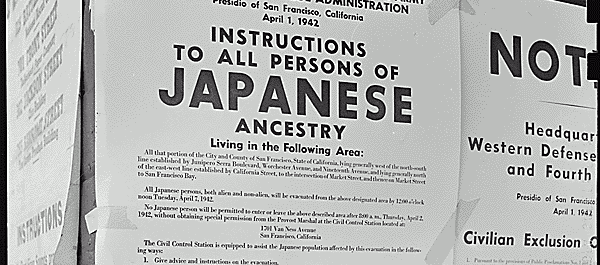
Folks on one side of the aisle have been off the rails about the possibility of President Obama’s executive orders in the gun control debate. Another of those infamous White House petitions has been started. This one is called “Impeach President Barack Obama if Executive Orders are signed to ban Assault Rifles, Guns & High Capacity Magazines”. The text of it reads The Vice President has made it clear that 19 Executive Orders could / will come about if an Assault Rifle / High Capacity Magazine ban is not passed through the House. This is a violation of our 2nd Amendment. I propose that our elected officials Impeach President Barack Obama if he signs executive orders to take away this right to bear arms. Our 2nd Amendment was written to stand up against a tyrant government. Our government has F18s and F16s, we the people should be allowed a Semi Automatic Rifles to defend ourselves from a possible tyrant government take over. As of this writing more than 96,000 signatures had been affixed. The lethality of an AR-15 against “F18s and F16s” has not been verified as of this writing. Some levels of ignorance are deep. That is not meant as insult, but according to the strict usage of the word. Most people simply have not taken the time to determine reality, or maybe people do not care. Either way, as with the petition above, it does not slow the opinion making or proclaiming, errant though it may be. There is a certain comfort level that comes with parroting what you have heard rather than finding the truth. Enough of the opinion piece, back to the post… Online resource Wikipedia says about executive orders (sometimes called “presidential directives”): United States Presidents issue executive orders to help officers and agencies of the executive branch manage the operations within the federal government itself. Executive orders have the full force of law, since issuances are typically made in pursuance of certain Acts of Congress, some of which specifically delegate to the President some degree of discretionary power (delegated legislation), or are believed to take authority from a power granted directly to the Executive by the Constitution. According to the Government Archives, “Executive orders are official documents, numbered consecutively, through which the President of the United States manages the operations of the Federal Government.” Another explanation is given here, Executive Orders (EOs) are legally binding orders given by the President, acting as the head of the Executive Branch, to Federal Administrative Agencies. Executive Orders are generally used to direct federal agencies and officials in their execution of congressionally established laws or policies. However, in many instances they have been used to guide agencies in directions contrary to congressional intent. Not all EOs are created equal. Proclamations, for example, are a special type of Executive Order that are generally ceremonial or symbolic, such as when the President declares National Take Your Child To Work Day. Another subset of Executive Orders are those concerned with national security or defense issues. These have generally been known as National Security Directives. Under the Clinton Administration, they have been termed “Presidential Decision Directives.” Executive Orders do not require Congressional approval to take effect but they have the same legal weight as laws passed by Congress. The President’s source of authority to issue Executive Orders can be found in the Article II, Section 1 of the Constitution which grants to the President the “executive Power.” Section 3 of Article II further directs the President to “take Care that the Laws be faithfully executed.” To implement or execute the laws of the land, Presidents give direction and guidance to Executive Branch agencies and departments, often in the form of Executive Orders. They detail which part of the executive branch is responsible for a dropped ball, and extend EOs issued by previous presidents. In short an executive order has the force of law because it is intended to clarify existing law. It would make very little sense to patch a concrete wall with a bandaid. This is not to say some president would not–or has not–used them inappropriately or expanded the powers of the executive branch unconstitutionally. I have no doubts about that. But, they all do it, not merely the ones “on the other team.” How it usually works is this: Republican President issues executive order. Republicans assert its absolute necessity or ignore it altogether. Democrats’ hair catch on fire and warn of implosion of democracy. Democrat President issues executive order. Democrats cheer as if biblical prophecy has been fulfilled. Republicans, with scalps on fire, warn of looming dictatorship. Libertarians warn of both no matter who is in the presidency, but that’s for another post. The fact is that President Obama is on pace to issue fewer executive orders than George W. Bush (291), Bill Clinton (364), Ronald Reagan (381), Jimmy Carter (320), Richard Nixon (364), Lyndon Johnson (324), Dwight D. Eisenhower (486), Harry S. Truman (896), Franklin D. Roosevelt (3,728, *winner). Through 2012 Obama has issued only 144. (Click here for EO numbers, dates and subjects.) Simply and fairly all presidents use EOs when they feel such instruments are needed. Since Hoover, all presidents save 2 or 3 have used EOs to a greater degree than Barack Obama. The sky is not falling until he decides he wants to pass Truman or Roosevelt. If he tries, we all will know because he will need carpal tunnel surgery on both wrists. *-In fairness, Roosevelt was in office 13 or so years and governed during a world war. Still his average per year was far above all others. UPDATE: See also The list of Obama’s 23 executive orders on gun control

What is the big deal about Pinterest?
Over the last year the social media site Pinterest has grown at an exponential rate. The site has more recipes, home decor, home remodeling, and how-to’s than Ted Turner has bison patties. Since its inception it has consumed more women’s time than Anonymous has spent hacking government databases. Users of Pinterest “pin” web pages links on “boards.” These boards can be themed to most any interest. “Following” others on Pinterest allows you to see what they pin to their board. If you like a particular item on another person’s board, you can “repin” it to your board. Influence on Pinterest is measured by the number of followers and numbers of repins. For many, many years Sonya (my wife) crammed recipes into notebooks. Reading through various magazines inevitably led to pages ripped out and put into binders. Those were the “one day I’m doing this in our house” binders. Recently I realized, for her, Pinterest is a visual, organized, readily accessible, virtual binder. The pages that once filled our laundry room are still there, but few have been added since she joined Pinterest. But that was not the most unusual thing. Last week Sonya told me if Pinterest began charging she would pay to keep her account. If you know anything at all about social media you know that “how shall we monetize” is the billion dollar question. ($64,000 was just way too cheap.) Facebook users threaten armed revolt every time the idea makes the rounds. Twitter has banner ads and “sponsored” tweets. That is just a polite way of saying someone I do not follow paid to force themselves onto my feed. So the idea of someone who would willingly and unhesitatingly pay to use a particular social media really caught my attention. I had already begun to think through how Pinterest is different from other types of social media. I have settled on this for one primary difference: Pinterest serves as a repository of information people access again and again. It’s combination virtual bulletin board, notebook and file cabinet all in one online stop. As my wife said, “I don’t want to lose all of that; I’ve worked too hard to get it together.” If that is the case with a large percentage of users, Pinterest may find a way to become profitable where other social media have not been successful, or have feared to try. If you are on Pinterest, please leave me a comment stating why you are drawn to it. If you are a “power user,” would you pay to keep all the pins you have? Do you have a board for blog posts? Take a second to pass this post along to friends who love Pinterest and ask them to leave an answer.
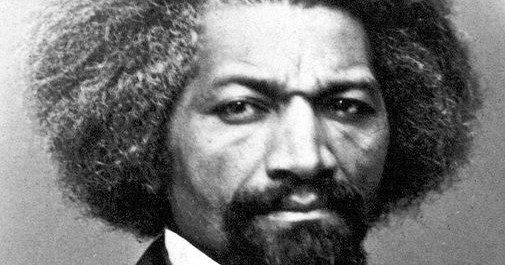
Frederick Douglass on authentic Christianity
A few months back the twitters and blogosphere erupted over a song by hip-hop artist, Propaganda. I wrote about it as well. The song is entitled “Precious Puritans” and is, in a Grand Canyon of understatement, thought provoking. Concerning well beloved puritan theologians, he raps: How come the things the Holy Spirit showed them in the valley of vision didn’t compel them to knock on they neighbors door and say, “You can’t own people!”? Your precious puritans were not perfect. You romanticize them as if they were inerrant. As if the skeletons in they closet was pardoned due to the they hard work and tobacco growth. As if abolitionists weren’t racist and just pro-union. As if God only spoke to white boys with epic beards. You know Jesus didn’t really look like them paintings. That was just Michaelangelo’s boyfriend. Your precious puritans. Dr. Anthony Bradley, addressing the response to the song (too often White and negative), tweeted this: Evangelicals tend 2 misinterpret black discourse & language norms. A huge reason 4 misunderstanding “Precious Puritans” catdir.loc.gov/catdir/samples… — Anthony Bradley (@drantbradley) October 1, 2012 The link is to a scholary paper from Cambridge University Press entitled, “Language, Discourse and Power in African American Culture.” One African-American who used language, discourse and power to rip the church the proverbial “new one,” was Frederick Douglass. Douglass (1818-95), a prominent American abolitionist, author and orator, launched a critique at the American Christianity of his day the comprehensiveness of which has scarcely been equaled. The intensity, analysis and truth shames many an attempt that have followed. My friend Alan Cross, who blogs at Downshore Drift, recently made me aware of an excerpt from Douglass’ autobiography, Narrative of the Life of Frederick Douglass, an American Slave. In it the former slave writes: I love the pure, peaceable, and impartial Christianity of Christ: I therefore hate the corrupt, slaveholding, women-whipping, cradle-plundering, partial and hypocritical Christianity of the land. Indeed, I can see no reason, but the most deceitful one, for calling the religion of this land Christianity. I look upon as the climax of all misnomers, the boldest of all frauds, and the grossest of all libels. Never was there a clearer case of ‘stealing the livery of the court of heaven to serve the devil in.’ I am filled with unutterable loathing when I contemplate the religious pomp and show, together with the horrible inconsistencies, which everywhere surround me. We have men-stealers for ministers, women-whippers for missionaries, and cradle-plunderers for church members. The man who wields the blood-clotted cowskin during the week fills the pulpit on Sunday, and claims to be a minister of the meek and lowly Jesus. . . . The slave auctioneer’s bell and the church-going bell chime in with each other, and the bitter cries of the heart-broken slave are drowned in the religious shouts of his pious master. Revivals of religion and revivals in the slave-trade go hand in hand together. The slave prison and the church stand near each other. The clanking of fetters and the rattling of chains in the prison, and the pious psalm and solemn prayer in the church, may be heard at the same time. The dealers in the bodies and souls of men erect their stand in the presence of the pulpit, and they mutually help each other. The dealer gives his blood-stained gold to support the pulpit, and the pulpit, in return, covers his infernal business with the garb of Christianity. Here we have religion and robbery the allies of each other—devils dressed in angels’ robes, and hell presenting the semblance of paradise. Thoughts? The Kindle version of Narrative of the Life of Frederick Douglass is available free below. Just click the Amazon link.
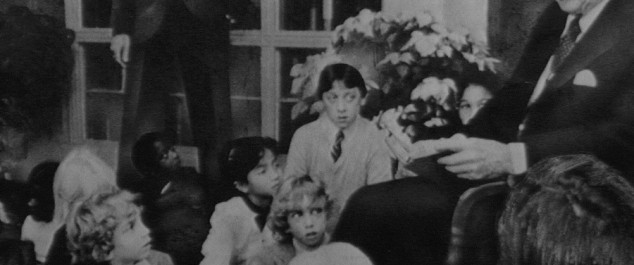
Obama surrounds himself with children just like…
A meme circulating heavily this morning has to do with President Obama’s scheduled speech on gun control. According to White House Press Secretary, Jay Carney, [T]he president will be joined by Vice President Joe Biden as well as children who wrote to the president after the Newtown shootings. “They will be joined by children around the country expressing their concerns about gun violence and school safety, along with their parents,” Both passions and accusations have run high since the Newtown, CT massacre as Sandy Hook Elementary School. The image below is one. I mean, seriously, if Hitler, Mao, and Stalin had their pictures made with children does that not make Obama equal to them? I drink bottled water. I’m sure every president in recent memory drinks bottled water. That does not mean I am or have been the president. We will forego the old putting pants on one leg at a time saw. The stupid thing about the meme is, like many of the same genre, there is no context at all. They are simply pictures of a known leader and kids. Except for Stalin. That’s a drawing. He had probably already killed those kids. Or, maybe they were happy to get another potato. [UPDATE: A missionary friend of mine had this to say about the Stalin poster: “What’s ironic is that the Stalin poster is actually a parody. It says, ‘Thank you dear Stalin for shooting our parents.’”] But, since we are on the subject, here is another well known dictator with a bunch of kids: And another (in fairness he did not get the chance to be dictator, but would have): And another: And another: Please don’t fall for these things. Guilt by association is not the domain of truth seekers. Besides that, easily disproven assertions weakens your argument and your credibility. Oh, and that thing about Hitler taking away all the guns in Germany before the Holocaust? You might want to check again. It is not true. And here is a solid explanation of the Hitler “For the first time, a civilized nation has full gun registration” quote. Hint: He did not say it.

Against the objectification of females
When you see an image of a woman who is presented passively, and who demonstrates no other attributes aside from her physical or sexual being, that’s objectification. Naomi Rockler-Gladen, from her article “Media Objectification of Women“ A year or so ago I removed all my domain registration accounts from Godaddy.com. It was the first hosting company I ever used because it was the most well known due to their heavy advertising. Gradually though, something began to gnaw at me about their ads. For years companies have used sensuality to sell everything from beer (remember the Swedish Bikini Team?) to burgers (the current Hardee’s middle-school mentality). Go Daddy was doing the same thing. It was like they were afraid most people could not conceive of domain space in the same way they could a hamburger. The result was skin tight leather, lots of cleavage and scant information about how to reserve mywebsite.com. The movement to liberate women from the supposed shackles of male oppression in the U.S. celebrated the right of women to assert themselves, to use their feminine wiles to their lasting advantage. “If you have it, flaunt it,” was expressed by more than one approving feminist. But a not-so-funny thing happened on the way to, or perhaps as a result of liberation: objectification. One end of liberation has clearly been a loss of respect. Men have certainly lost respect for women, but women have also lost respect for themselves. When primary expressions of liberation include women making objects out of themselves someone needs to ask, “Is this all there is?” While Rockler-Gladen’s definition above is valid, I think the issue is deeper. Objectification is to disregard the humanness of any person for any purpose of self-satisfaction. Objectification takes place when a pimp beats a women into submission and lies repeatedly to keep her there, so he can sell her for profit. She is not feminine, she is not human, she is an object to be traded. Objectification takes place when a professional rapist humiliates, assaults and violates an eight-year old girl in some dank Indian brothel until her spirit is broken. She is not feminine, she is not human, she is an object to be rented. Objectification takes place when twenty adult males file in to rape that same girl on Monday, twenty more on Tuesday and another twenty day after day until emotionally she is destroyed, mentally she is decimated and physically she is diseased. Then, like an object, she is thrown onto the streets. Nicholas Kristof reports: In India, a 23-year-old student takes a bus home from a movie and is gang-raped and assaulted so viciously that she dies two weeks later. In Liberia, in West Africa, an aid group called More Than Me rescues a 10-year-old orphan who has been trading oral sex for clean water to survive. In Steubenville, Ohio, high school football players are accused of repeatedly raping an unconscious 16-year-old girl who was either drunk or rendered helpless by a date-rape drug and was apparently lugged like a sack of potatoes from party to party. And in Washington, our members of Congress show their concern for sexual violence by failing to renew the Violence Against Women Act, a landmark law first passed in 1994 that has now expired. Most do not see most objectification for what it is. However, the attitude is the same even if the end result is not. That we oft mistake it for beauty speaks as poorly on the viewer as on the victimized. In January 2012 Kent Meuller posted “Marketing and our Messed Up Priorities: How We Got it Wrong with GoDaddy” on his blog at Inkling Media. Part of his argument against objectification included this story from a girl who worked for a short time at a Hooters restaurant. She said, A restaurant like that makes it appear okay to objectify women in a sexual state and a sexual state only. I’m an attractive girl carrying your food wearing a tank top showing off my [breasts] and booty shorts. On top of this, we were encouraged to flirt and ‘tease’ our customers in order to not only get bigger tips, but continue business. Even worse, people bring their CHILDREN in there…we had a birthday party for an 8 or 9 year old. I mean, they have a kids menu! I was embarrassed by my job so much that I didnt tell my family thats where I worked. At that time, I was also suffering from the affects of bulimia and anorexia, so I think obviously it had a negative effect on that as well. I felt like a stripper with clothes on, basically. Innapropriate is not even the word to use with some patrons. They feel it is okay to brush against your butt, stare down your shirt, but the uniforms encourage that, so in return, the restaurant is basically encouraging it. Being asked on a date is one thing, but being solicited for sex, is another. If a patron was very rude or inappropriate, they would be asked to leave [by management], but butt taps, etc, were not punishable. “Just let it go,” was a normal response. It absolutely was my choice to work there, and it gave me a better understanding of self worth and what our society has done to women. When a society allows, yea encourages, objectification of a class that class loses their innate humanity. It is not possible to see people as humans created in God’s image and as objects at the same time. Objectification and exploitation can only be stopped by men, because in almost every case men are the end users. Men fill the brothels, men descend upon the Super Bowl host city to pay for the opportunity to exploit women and girls for the night, men fly into cities like Atlanta, Georgia to attend “parties” where they’ve paid for the opportunity to rape girls, many of them drugged into compliance. Men pimp, men
Barack Obama the accidental pro-life president
If only our president was moved to compassion over the plight of unborn children as he was after the tragedy at Sandy Hook. He has never been more eloquent. If only… But when it comes to the most defenseless of all, our president is double-minded at best. Which is more defenseless, a six year old in a classroom facing a gunman or a child still attached to the mother confined by the walls of the womb facing a medical technician with dismemberment in mind? If a child in a classroom is defenseless against a madman, how much more so a unborn child against calm, methodical, professional annihilation? Mr. President, get your thinking in order. A double minded man is unstable in all his ways (James 1:8). (HT: Justin Taylor)

Newsnippets, January 12, 2013
Newsnippets, January 12, 2013 From Women Under Siege Syria: Member of opposition group confesses to rape on state TV Syria Online TV, a state-owned news source, posted a video to YouTube on December 10, 2012, that features a confession of rape from a member of an opposition group referred to as “Abdulhadi’s gang.” The speaker is introduced as Mahmoud al-Akkari, born in 1978 in Talbiseh, a suburb of Homs. He says that he, Abdulhadi al-Akkari—to whom his relationship is not specified—and Sheikh Zakariyya al-Dakka agreed to join ongoing Talbiseh protests. He then proceeds to describe the range of crimes he and “Abdulhadi’s gang” allegedly committed, including the kidnapping of “five girls from different neighborhoods.” He goes on to say that the group “took them to the farm, where they raped and murdered them.” He does not specify where this farm is located. From Slate: Mr. Schmidt goes to Pyongyang On Monday, Google Chairman Eric Schmidt arrived in North Korea, a country that is almost completely cut off from the Internet. Schmidt, who is traveling with former New Mexico Gov. Bill Richardson, is part of what has been termed a private humanitarian mission. The State Department has nonetheless expressed dissatisfaction, saying that the timing of the visit is not “particularly helpful.” […] But if the timing is bad for traditional diplomacy, then what about digital diplomacy? Digital diplomacy entails leveraging new connection technologies to shape international relations. The beauty of this concept is that it doesn’t have to be strictly between one government and another. It can be conducted by technology companies, NGOs, or even ordinary citizens. A visit to North Korea by the chairman of Google, even in his “private” capacity, seems to fall into this category. The trip might even indirectly further one of the State Department’s key goals, which is to promote the “freedom to connect.” From The Guardian: U.S. attacks counter productive, former Obama security advisor claims In his study, Boyle said Obama pledged to end the “war on terror” and to restore respect for the rule of law in US counter-terrorism policies.”Instead, he has been just as ruthless and indifferent to the rule of law as his predecessor … while President Bush issued a call to arms to defend ‘civilisation’ against the threat of terrorism, President Obama has waged his war on terror in the shadows, using drone strikes, special operations and sophisticated surveillance to fight a brutal covert war against al-Qaida and other Islamist networks.” Boyle, who teaches at La Salle University, Philadelphia, said the government claim that drones were an effective tool that minimised civilian casualties was “based on a highly selective and partial reading of the evidence”. He argues one of the reasons why the US has been “so successful in spinning the number of civilian casualties” is that it has reportedly adopted a controversial method for counting them: all military-age men in a strike zone are classed as militants unless clear evidence emerges to the contrary. From the Japan Times: U.S. imagination goes wild regarding Iranian ‘threat’ When compounded with the other imagined threats of Hezbollah and Hamas, all with sinister agendas, then the time is right for Americans to return to their homes, bolt their doors and squat in shelters awaiting further instructions, for evidently, “The Iranians are coming.” It is as comical as it is untrue. But “The Countering Iran in the Western Hemisphere Act,” which as of Dec. 28 is an official U.S. law, is not meant to be amusing. It is riddled with half-truths, but mostly complete and utter lies. From the BBC: French forces continue to launch air strikes against Islamist militants in Mali [Jean-Yves Le Drian, French Defense] minister said Paris had decided to act urgently to stop the Islamist offensive, which threatened to create “a terrorist state at the doorstep of France and Europe”. He also revealed that a French pilot was killed in Friday’s fighting – during an air raid to support Mali’s ground troops in the battle for Konna. “During this intense combat, one of our pilots… was fatally wounded,” the minister said. Speaking on Friday, French President Francois Hollande said the intervention complied with international law and had been agreed with Malian interim President Dioncounda Traore. It would last “as long as necessary”, Mr Hollande said. From CNN Asia: Study finds the world wastes half its food Up to half of the world’s food is wasted, according to a new report that found production inefficiencies in developing countries and market and consumer waste in more advanced societies. The British-based independent Institution of Mechanical Engineerssaid about 4.4 billion tons of food is produced annually and roughly half of it is never eaten. Some of it is lost to inefficient harvesting, storage and transportation, while the rest is wasted by markets or consumers. The group also said food waste also impacts land, energy and water use. “This level of wastage is a tragedy that cannot continue if we are to succeed in the challenge of sustainably meeting our future food demands,” the group said in its report. From Popehat: All you ever wanted to know about the “trillion dollar coin” As keen observers of the national conversation know, deep thinkers have floated the idea of minting a trillion dollar coin for deposit into the United States treasury to cure the nation’s deficit. This bold plan, endorsed by luminaries including New York Congressman Jerrold Nadler, Nobel laureate economist Paul Krugman, and Kai Ryssdal, host of public radio’s award-winning Marketplace program, has the potential to solve America’s fiscal crisis overnight, with no partisan bickering and no repercussions for world currency markets. But can the coin (or sixteen of the coins, to be precise) be struck? For the answer to this question, we turned to legal, numismatic, and political experts. Their answers were discouraging. From The Edge of the Inside: Thoughts from the Brent Musburger/Kathleen Webb discussion When Christians claim human beings are made in the Image of God, then it stands that to consider the
Why and how to verify Google authorship
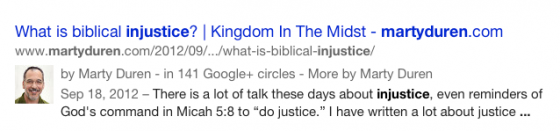
For more than a year Google has been working toward an initiative to begin attributing content to the original authors. This is a very beneficial step to assist content producers. It seems to me to be a protection against the practice of “scraping” in which the contents of a post are lifted from the base html and reposted on another site. As Brian Clark at Copyblogger.com has noticed about Google authorship: Google made talented writers more important with the Panda and Penguin updates. Instead of weak content and “unnatural” link building, now sites need strong content that attracts links organically. But it hasn’t stopped there. Now who creates the content, and who does the linking out matters – which is why Google wants to know who you are via your Google+ authorship profile. What’s been dubbed Author Rank has the potential to be the biggest algorithmic signal for SEO since the hyperlink itself. The days of lame anonymous content are over. Even better, rock star writers with demonstrated success and strong social followings will command the highest compensation and equity positions. Think about that. Here’s how Google itself describes the benefit: The name of the writer can be used to influence the ranking of web search results by indicating the writer responsible for a particular content piece … Assuming that a given writer has a high reputational score, representing an established reputation for authoring valuable content, then additional content authored and signed by that writer will be promoted relative to unsigned content or content from less reputable writers in search results. Google Authorship is linked to your Google+ profile and verifies you and the author of content you produce. Your G+ profile appears in some search results. See the screenshot below for an example. The word on the street is Google authorship will be combined with Google’s Page Rank as a means of better reporting search results. This is important for blog owners and contributing writers to collaborative websites. When you are searched by name or name and a topic (“I can’t remember the website, but the guy was something “Duren” and the article was about social justice.”) verified authorship can help in that kind of search. Also, as you gain influence on certain subjects, you will rise in search results on those subjects. So, how does one become a verified Google author? Here are two ways, one of which is very simple. The second requires more effort but worked better for me. First, you must have a Google+ account. This is a closed eco-system, so a Facebook account alone will not work with it. Make sure you have a headshot as your photo, not a mountain range or a picture of Foghorn Leghorn. With a G+ account you should be able to verify authorship by using your email address. Go to plus.google.com/authorship and follow the directions. You will receive an email from Google. Click on the included link and verification should take place. Please note: You must have an email that matches the top level domain of your website. In other words, if your website is ireallylikegoogleplus.com you must have an email on that domain like mail@ireallylikegoogleplus.com or jedimaster@ireallylikegoogleplus.com. A Yahoo or Hotmail address will not suffice. (Gmail used in conjunction with a POP3 mail account worked for me.) One thing of note: I tried the email registration method a week ago and received a response email from Google. Subsequently my Google+ account indicated the email was verified. However, I never received any indication from Google that authorship had been verified. When I used the step below my Google Authorship status was verified in a matter of hours. The graphic below is a screen grab from this page. Follow the directions step-by-step. The link on step on was place on the “About” page of my blog. I chose to use “Google+” as the hyperlink word rather than “Google.” After completing this process you should receive an email confirmation from Google. It took several hours for me to receive the email. (If you need further information, this article by Rick DeJarnette breaks the process down even more.) I would suggest additionally to add to your G+ profile any other social media accounts that use the same name you are attempting to register with Google Authorship. I registered my Twitter, Facebook, LinkedIn, Flickr and Myspace accounts. What are your thoughts on Google authorship? How did the registration attempt work for you? Anyone become a verified author using only the email confirmation method?

Touch not God’s anointed?
There are a few things that should send up all kinds of red flags should you see them in the pastor of your church
Eight reasons you should start or restart a blog in 2013
Circa 2006 blogging was all the rage. You could head over to Blogger.com, Typepad.com or WordPress.com, sign up and join in the burgeoning movement. Books were already being written about this new version of the printing press. “Official” news sources worried over losing readership to blogs. Real news stories–not just opinion pieces and rants–were regularly broken by bloggers. A blog, initially an abbreviated form of “web-log,” is a website that allows for interaction, rather than a one-way broadcast of information. Interaction takes place in the comment thread, where, hopefully, additional information is shared. As it tend to happen, depending on the size of the readership, the content of the post is addressed for about three comments. After three comments the comments tend to run off the rails until, invariably, someone brings up Hitler or the Nazis. (See Godwin’s Law.) A good blog owner is also a good moderator, keeping out the trolls and keeping the conversation on topic. Eventually mainstream media outlets threw in their respective towels and joined the fun. Many major news organizations now have a blog section to their main websites. CNN and the Washington Post are two featuring multiple blogs. With the advent of Facebook and Twitter blogs and blogging seemed to take a lesser role in the social media space. The ease of connecting with so many friends and family (Facebook) and the brevity of microblogging (Twitter) caused many to lose interest in the longer form writing of the blog. Or maybe it was just a bum-rush to the new trend. After this interlude blogging is making somewhat of a comeback. I’ve seen a number of new blogs started in the last few months by my friends, while others are resurrecting dormant blogs with new material. If you do not have a blog, should you start one? If you have a dead blog should you breath into it the breath of life in 2013? I think the answer to both questions is an unequivocal “yes” and here are eight reasons why: 1. Blogs are searchable. For all the fun and benefit of other social media, nothing is more searchable than blog content. When using a search engine like Bing or Google to find content, you will notice that Tweets and Facebook status updates do not lead the way. Blogs and websites do. This means your blogged thoughts will be searchable to people all over the world 2. Blogs allow for fuller development of ideas. As much as I love tweeting there is a limit to how much one can develop and express a distinct philosophy of government or religious belief in 140 characters. Even if you choose the terrible multi-tweet method (1/6, 2/6, etc) the fulness of a blog post cannot be captured. 3. Thought leaders depend on blogs for idea sharing. Seth Godin, Thom Rainer, John Maxwell, Tom Peters, and Mary Jo Asmus are not feeding the flock, as it were, on Facebook. While some will give pithy saying in other social media, their blogs are where ideas are shared in full. 4. Blogging hones the craft of writing. A goal of 2-3 posts per week forces you to give thought and effort to writing. The more you write, the better you tend to get. (Especially if you ask for feedback.) 5. Blogging helps release your creative side. Through this practice I have uncovered a desire to be a better, more creative writer. I am not looking to conquer the world of science fiction or fantasy, but I do want better turns of phrase. I want to be more precise, to be more descriptive. I want my writing to be memorable. I doubt I would ever have written a book had I not blogged first. 6. Connection with people of like interests. “Mommy bloggers,” “Foodies” and political junkies are examples of this. Blogging allows you to connect with other people who have the same interests as you. 7. To make money. Most bloggers do not make money. Many will make less than $100 during the entire life of their blog. If you intend to blog for money, be prepared to put in many, many hours of content creation and link building. Only a few make it to the rarified air of living from blog advertising, but that does not mean you cannot! Google offers advertising based on ad clicks. Beacon Ads pairs websites with advertisers who pay a flat rate based on traffic. Commission Junction represents many, many advertisers. Amazon.com has a fantastic affiliate program. 8. Educating yourself and others. Blogging provides the opportunity to learn. If you write about news related topics–whether firsthand reporting or opinion–you will need to study, gather facts, double check information, write, and, sometimes, provide corrections. Information you post will be learned by others. It can be a great process. The books below will be helpful if you are interested in more information. You will get the same low Amazon.com price and I get a small commission.